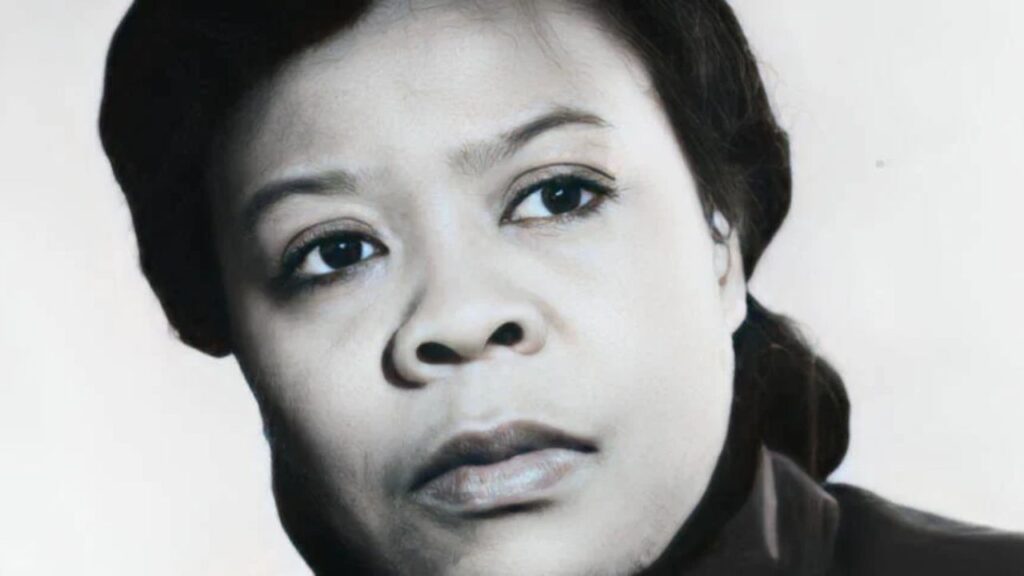
We owe our modern home security systems to Marie Van Brittan Brown, a nurse from Queens, New York, who invented the first comprehensive home security system in 1966 alongside her husband Albert L. Brown. Their revolutionary patent laid the groundwork for every doorbell camera, smart lock, and surveillance setup we rely on today.
Picture this: a nurse coming home late at night in a rough neighborhood, waiting forever for police to show up when trouble hits, and deciding she’s had enough of feeling unsafe. That’s exactly what sparked one of the most important inventions of the 20th century. Marie Van Brittan Brown didn’t just create a fancy gadget—she built the blueprint for how we protect our homes right now.
Back in the 1960s, keeping your house safe meant locks, maybe a dog, and hoping for the best. Brown changed everything by thinking outside the box. Her system combined cameras, audio communication, remote locks, and emergency alerts into one package. Pretty wild when you consider most folks didn’t even have color TV yet.
Key Takeaways:
- Marie Van Brittan Brown created the first modern home security system in 1966, working with her electronics technician husband Albert
- The original system featured video surveillance, two-way audio, remote door locks, and emergency alerts—components still used in today’s security setups
- Brown received U.S. Patent 3,482,037 on December 2, 1969, which has been referenced in over 30 subsequent security patents
- Living in a high-crime area with slow police response drove Brown’s innovation, proving necessity truly sparks invention
- Modern video doorbells, CCTV systems, and smart home security directly descended from Brown’s 1960s design

The Woman Who Changed Home Security Forever
Marie Van Brittan Brown’s Background and Motivation
Born October 30, 1922, in Jamaica, Queens, Marie Van Brittan Brown spent her life in the same New York community where she’d eventually revolutionize home safety. Working as a nurse meant crazy hours—sometimes getting home when most people were fast asleep. Her husband Albert worked different shifts as an electronics technician, so they weren’t always home together.

Their neighborhood had a serious crime problem, and getting police to respond quickly? Forget about it. Instead of accepting this scary reality, Marie got creative. She figured if she couldn’t count on outside help arriving fast, she’d better create her own protection system. That mindset—taking control rather than staying vulnerable—drove her entire invention process.
How the Browns Developed Their Revolutionary System
Marie brought the vision and practical understanding of what homeowners needed. Albert contributed his technical know-how with electronics. Together, they built something nobody had seen before. Their collaboration shows how combining different skills creates breakthrough innovations.
They filed their patent application on August 1, 1966, listing Marie as the primary inventor. The official title read “Home Security System Utilizing Television Surveillance.” Getting that patent took three years, but on December 2, 1969, they officially owned Patent Number 3,482,037.
Breaking Down the Original Home Security System Components
The Multi-Height Camera and Peephole Design
Here’s where Brown’s nursing experience showed up in her invention. She knew families include people of different heights—tall adults, average-sized folks, and kids. So she designed four peepholes positioned at various heights on the front door.
The brilliant part? A motorized camera could slide up and down on the inside, lining up with whichever peephole made sense for the visitor’s height. This vertical movement let homeowners get a clear view of anyone standing outside, regardless of how tall or short they were.
Wireless Video Transmission Technology
Remember, this was 1966. Most homes had one television set, and the idea of transmitting video wirelessly seemed like science fiction. Yet Brown’s system used radio signals to send camera footage from the front door to a monitor mounted on an interior control panel.
This wireless connection meant homeowners could see visitors without walking to the door or peeking through curtains. For someone arriving home late at night, this feature was a game-changer. You could check who was outside before even entering the danger zone near your entrance.
Two-Way Audio Communication System
Brown included microphones and speakers both inside and outside the door. This setup allowed homeowners to talk with visitors remotely—ask who they are, what they want, or tell them to leave, all without opening the door or getting close to potential danger.
Think about delivery drivers, unexpected guests, or suspicious characters. Having that ability to communicate without physical proximity added another layer of safety. We take this for granted with modern video doorbells, but in the 1960s, this was revolutionary thinking.
Remote-Controlled Door Locks
The system featured electronically controlled locks that could be opened or closed from the control panel. No more walking up to unlock the door for trusted visitors. If Grandma stopped by, you could let her in remotely. If someone sketchy was lurking, you stayed safely away from the entrance.
This remote access eliminated the vulnerable moment when you’d traditionally unlock and open your door. Brown understood that even those few seconds could make the difference between safety and danger.
Emergency Alert Capability
Perhaps the most crucial component was the panic button. One press immediately contacted police or security services. This instant emergency response feature meant help was literally at your fingertips, no matter where you were in your home.
For someone who’d experienced slow police response times, this direct alert system must have felt empowering. You weren’t waiting on hold or hoping dispatch took you seriously—you had a direct line to emergency help.
The Patent That Changed Everything
Recognition and Media Attention
When the Browns received their patent in 1969, people took notice. The New York Times interviewed Marie, bringing her innovation to a wider audience. The National Scientists Committee gave her an award, acknowledging her groundbreaking contribution to technology and public safety.
However, manufacturers didn’t jump to produce the system commercially. The technology was simply ahead of its time, and installation costs would have been sky-high in the late 1960s. Most families couldn’t afford the components, and the technical expertise needed for setup wasn’t widely available.
Lasting Impact on Security Technology
Despite never hitting mass production, Brown’s patent became incredibly influential. At least 32-35 subsequent patents have cited her work, with references appearing as recently as 2013—fourteen years after her death in 1999. That’s the mark of truly foundational innovation.
| Original Feature | Modern Equivalent |
|---|---|
| Motorized camera with peepholes | HD doorbell cameras with wide-angle lenses |
| Wireless video transmission | Wi-Fi connected security feeds |
| Two-way audio | Smart doorbell communication apps |
| Remote door locks | Smart locks controlled by smartphones |
| Emergency alert button | Integrated alarm monitoring services |
Her core principles—video surveillance, audio communication, remote access, and emergency alerts—form the backbone of contemporary security systems. Whether you’re looking at residential setups, apartment building security, office complexes, banks, or retail stores, Brown’s DNA is there.
The Evolution from Brown’s Design to Modern Security
How CCTV Systems Developed
Brown’s system essentially created the first residential closed-circuit television setup. CCTV had existed before, but mainly for military or industrial purposes. She brought it into homes, showing regular families could use video surveillance for protection.
Today’s CCTV systems work on the same basic concept—cameras capture footage and transmit it to monitors or recording devices for viewing. The technology got smaller, cheaper, and more powerful, but the fundamental idea remains unchanged from Brown’s 1966 design.
Smart Home Integration
Fast forward to now, and we’ve got entire ecosystems of connected security devices. Ring doorbells, Nest cameras, August smart locks—all these products trace their lineage back to Brown’s original patent. She envisioned integrated security before “smart homes” existed as a concept.
Modern systems add features like cloud storage, artificial intelligence for detecting people versus animals, and smartphone apps for remote access from anywhere on Earth. But strip away the fancy tech, and you’ll find Brown’s core components: video, audio, remote control, and emergency alerts.
Commercial Security Applications
Walk into any bank, shopping mall, or office building, and you’ll encounter security systems built on Brown’s principles. Video cameras monitor entrances, intercom systems allow communication before granting access, electronic locks control who enters, and alarm systems alert authorities to problems.
Her residential innovation scaled up to protect commercial spaces, government buildings, and public areas. Surveillance cameras now cover city streets, parking garages, and transportation hubs. Brown probably never imagined her invention would spread this far, but that’s the nature of truly transformative ideas.
Why Marie Van Brittan Brown’s Story Matters Today
Representation in Innovation
Marie Van Brittan Brown was an African American woman inventing groundbreaking technology in the 1960s—a time when both racial and gender barriers kept many talented people from pursuing their ideas. Her success shows innovation can come from anyone, anywhere, when they identify a problem and refuse to accept the status quo.
Her nursing background wasn’t in engineering or electronics, yet she designed a complex technical system. This reminds us that great inventions often come from people experiencing problems firsthand, not just from labs and universities.
Personal Safety as a Universal Need
Brown’s motivation—feeling unsafe in her own neighborhood—resonates with millions of people worldwide. Crime hasn’t disappeared, and many communities still struggle with inadequate police response times. Her invention addressed a fundamental human need: protecting yourself and your loved ones.
The massive home security industry we see today, worth billions of dollars, exists because Brown recognized and solved this universal problem. Every family installing a Ring doorbell or SimpliSafe system is benefiting from her insight that technology could empower individuals to take charge of their own safety.
The Power of Collaborative Innovation
Albert Brown’s contribution as an electronics technician was essential to turning Marie’s vision into reality. Their partnership demonstrates how combining different expertise and perspectives leads to better solutions. She understood the problem intimately; he knew how to build the solution technically.
Too often, we credit individual “lone genius” inventors while ignoring the collaborative nature of innovation. The Browns show us that working together, pooling knowledge and skills, creates more powerful results than going it alone.
Marie Van Brittan Brown’s Legacy
Marie passed away on February 2, 1999, at age 76, still living in Queens where she’d spent her entire life. Her daughter Norma became both a nurse and inventor, following her mother’s footsteps in career and creativity. That continuation of innovative thinking speaks to the values Brown passed down.
Though her system never made her wealthy through mass production, her legacy lives on in every security camera, every smart doorbell, every remote lock we use today. She literally changed how humanity protects homes and buildings, creating technology that has saved countless lives and prevented immeasurable property loss over the past six decades.
Additional Important Facts About Home Security System Development
Timeline of Security Technology Milestones
Understanding where Brown’s invention fits in the broader history helps appreciate its significance:
- 1853: Augustus Russell Pope invented the first electromagnetic alarm system
- 1942: Marie Van Brittan Brown was born (though this date is sometimes listed as 1922)
- 1966: Brown filed her revolutionary home security system patent
- 1969: Patent granted for the first integrated home security system
- 1972: Closed-circuit television began appearing in public spaces more frequently
- 1990s: Digital video recording started replacing analog tape systems
- 2000s: Internet-connected security systems emerged
- 2010s: Smart home security with smartphone control became mainstream
- 2020s: AI-powered security with facial recognition and pattern detection
The Cost Factor in Security Adoption
One reason Brown’s system didn’t immediately catch on was expense. In the 1960s and 70s, the components alone—cameras, monitors, motorized systems, wireless transmission equipment—would have cost a fortune. Professional installation added more expense.
As technology advanced and manufacturing scaled up, prices dropped dramatically. What might have cost thousands in 1969 dollars (equivalent to tens of thousands today) now runs a few hundred bucks for a comprehensive DIY system. This price evolution made Brown’s vision accessible to average families rather than just wealthy homeowners.
Global Impact on Crime Prevention
Studies show visible security systems deter criminal activity. Burglars often skip homes with cameras and alarm systems, moving to easier targets. Brown’s invention hasn’t just protected individual properties—it’s changed criminal behavior and helped reduce property crime rates in neighborhoods with high security adoption.
Her impact extends beyond America, too. Security systems based on her design protect homes and businesses worldwide, from Europe to Asia to Africa to South America. She solved a universal problem with a universal solution.
People Also Ask: Common Questions About Home Security System Invention
Who actually invented the first home security system?
Marie Van Brittan Brown invented the first modern, comprehensive home security system in 1966, working with her husband Albert L. Brown. While earlier alarm systems existed, Brown’s patent was the first to integrate video surveillance, two-way audio, remote locks, and emergency alerts into one cohesive system designed specifically for residential use.
When were surveillance cameras first invented?
The first closed-circuit television system was installed in Germany in 1942 to observe rocket launches, but Marie Van Brittan Brown pioneered residential surveillance cameras as part of her 1966 home security system. She adapted existing camera technology for home protection purposes, making surveillance accessible to regular homeowners rather than just military or industrial facilities.
Why did Marie Van Brittan Brown create her security system?
Brown worked as a nurse with irregular hours, often arriving home late at night in a high-crime Queens neighborhood where police response was notoriously slow. Feeling vulnerable and unsafe, especially when her husband worked different shifts, she decided to create a system that would let her protect herself rather than relying on external help that might arrive too late.
What happened to Marie Van Brittan Brown’s invention?
Though manufacturers never mass-produced Brown’s original system—likely due to high costs and the technology being ahead of its time—her patent became the foundation for all modern home security systems. Her design has been cited in over 30 subsequent security patents, and today’s video doorbells, smart locks, and surveillance systems all evolved from her 1966 innovation.
How is Marie Van Brittan Brown’s invention used today?
Every modern security system—from Ring doorbells to CCTV setups in banks—uses principles Brown established: video surveillance of entry points, two-way audio communication, remote access control, and direct emergency alerts. Her invention scaled from residential homes to commercial buildings, public spaces, and entire smart home ecosystems, protecting millions of people daily.
The Enduring Importance of Marie Van Brittan Brown’s Innovation
Looking at our security-conscious world in 2025, it’s hard to imagine life without the technology Marie Van Brittan Brown pioneered nearly 60 years ago. We tap our phones to see who’s at the door, unlock our homes remotely for guests, and sleep better knowing cameras watch our property. These everyday conveniences trace directly back to a nurse in Queens who refused to accept feeling unsafe.
Brown’s story teaches us that innovation doesn’t require fancy degrees or expensive labs—it requires identifying real problems and having the courage to imagine solutions. She saw a need in her own life and created technology that improved life for countless others. That’s the essence of meaningful invention.
Her legacy extends beyond the technical achievements. As an African American woman inventing in the 1960s, she broke through barriers that kept many talented people from pursuing their ideas. She proved that good ideas can come from anyone, anywhere, regardless of their background or formal training in a field.
Every time we check our doorbell camera app, every time a security system deters a would-be burglar, every time emergency alerts reach police instantly, we’re benefiting from Marie Van Brittan Brown’s vision and determination. She saw a world where regular people could take control of their own safety through technology, and she made that world real.
Her daughter Norma carrying on the family tradition of nursing and inventing shows how inspiration passes between generations. Brown didn’t just create devices—she created a legacy of creative problem-solving and refusing to accept the status quo.
We live in Marie Van Brittan Brown’s world now, one where technology empowers us to protect what matters most. Next time you glance at your security camera feed or unlock your door remotely, remember the woman who made it all possible. She turned fear into innovation, vulnerability into empowerment, and a personal problem into a global solution that continues changing lives decades after her passing.
That’s the mark of a true inventor—creating something so fundamental that it becomes invisible, so embedded in daily life that we forget it was ever invented at all. Marie Van Brittan Brown achieved that rare feat, and her contribution to home security systems deserves recognition alongside history’s greatest inventors. She made our homes safer, our communities more secure, and our world a better place through the power of innovative thinking.
Looking for an advanced home security system? Contact Callaway Security™ today!