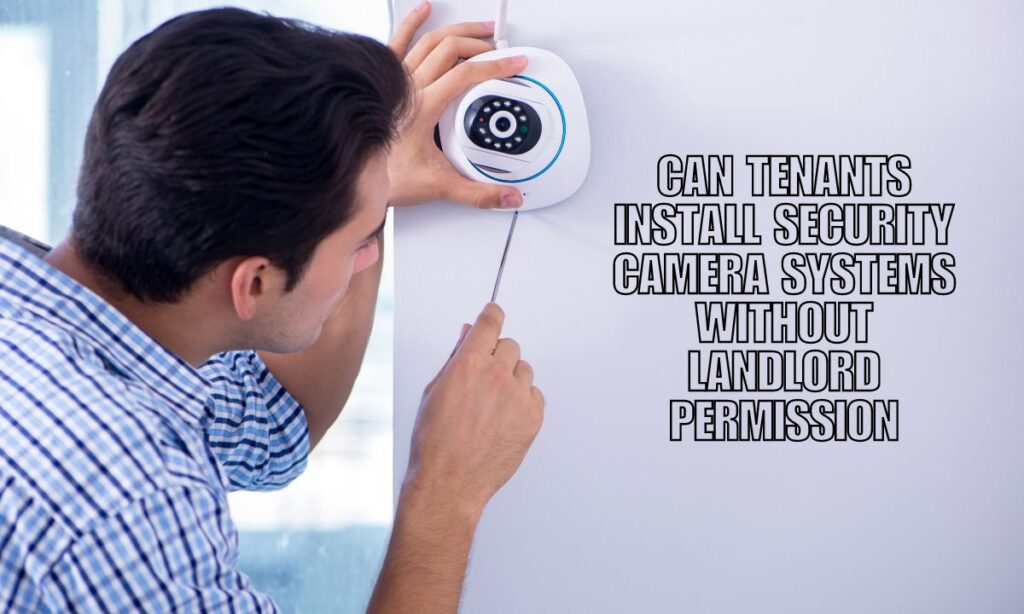
No, tenants in Georgia cannot legally install security camera systems without landlord permission, regardless of whether the cameras are wireless, battery-powered, or seem completely non-invasive. This prohibition comes from two separate legal sources: Georgia’s lease modification rules that govern rental property alterations, and the state’s strict video and audio recording laws. Even seemingly harmless adhesive-mounted cameras require written landlord approval before installation.
We understand the frustration here. You’re paying rent, the space feels like yours, and you want basic security measures to protect yourself and your belongings. That makes total sense. Unfortunately, Georgia law doesn’t see it the same way. The legal landscape creates significant barriers for renters who want to install their own security systems, and understanding these restrictions can save you from serious consequences including eviction, criminal charges, and losing your security deposit.
Key Takeaways:
- Written landlord permission is mandatory for any security camera installation, even wireless or temporary systems that seem non-invasive
- Georgia’s “all-party consent” video recording law makes it illegal to record people in private spaces without everyone’s permission—and your rental unit counts as a private space
- Lease violations can result in eviction, mandatory camera removal at your expense, and security deposit deductions for property damage
- Criminal penalties are severe: unauthorized surveillance can result in 1-5 years imprisonment and fines up to $10,000
- The safest approach is always requesting written approval before installing any surveillance equipment, with specific details about camera type, location, and mounting method

Understanding Georgia’s Lease Modification Rules
Georgia law establishes clear boundaries about what tenants can and cannot do to rental properties. According to the Georgia Landlord-Tenant Handbook issued by the Georgia Department of Community Affairs, tenants generally cannot substantially or permanently alter leased property without landlord permission.
The handbook specifically states that while you can make minor changes, it’s best to get written approval from the landlord to avoid disputes later about what actually qualifies as a “minor alteration.” You’re also required to return everything to the same condition it was in when you moved in, accounting for normal wear and tear.
Why Security Cameras Trigger Alteration Restrictions
Here’s where things get tricky for renters. Security camera systems—whether they’re high-end wired installations or simple wireless models—typically involve at least one of these actions:
- Drilling anchor holes into walls or ceilings for mounting brackets
- Installing mounting hardware that leaves marks or holes behind
- Running electrical wiring through walls or along baseboards
- Affixing adhesive strips that might damage paint or finishes when removed
- Mounting equipment on doors or door frames
Even adhesive-mounted wireless cameras that seem completely harmless carry risks. What you consider “non-invasive” mounting might not match your landlord’s definition of what constitutes acceptable “normal wear and tear.” That adhesive strip that pulls off paint when you remove it? Your landlord can legally charge you for repainting.
Consequences of Unauthorized Installation
Installing cameras without permission exposes you to multiple consequences:
Lease breach and eviction: Your landlord can initiate eviction proceedings based on unauthorized property alterations. Evictions become part of your rental history and make finding future housing significantly harder.
Mandatory removal costs: You’ll need to remove the cameras at your own expense, often on short notice if your landlord demands it.
Security deposit deductions: Your landlord can legally deduct restoration costs from your security deposit to repair any damage caused by the installation—holes, paint damage, adhesive residue, or mounting marks.
Additional damage liability: If restoration costs exceed your security deposit, you remain liable for the difference. Your landlord can pursue collection through small claims court.
Georgia’s Video Recording Laws: The All-Party Consent Requirement
Beyond lease restrictions, Georgia imposes strict criminal requirements on video recording that create additional barriers for tenants.
Under Georgia Code § 16-11-62, it’s illegal to observe, photograph, or record activities in a “private place” without consent from all persons being observed. The Georgia Supreme Court has clarified that video recording in private spaces—anywhere individuals have reasonable expectations of privacy—requires consent from every single person being filmed.
What Counts as a “Private Place”?
Georgia law defines “private places” broadly to include areas “out of public view.” For tenants, this encompasses:
- Individual residential units or bedrooms
- Bathrooms and changing areas
- Common hallways and shared living spaces in multi-unit buildings
- Lobbies, stairwells, and elevators in apartment complexes
- Any interior space where occupants maintain reasonable privacy expectations
This creates a major problem for renters. Even if you install a camera only monitoring your own bedroom or unit entrance, any footage capturing roommates, neighbors, or visitors in areas where they reasonably expect privacy violates this statute. That hallway camera pointing at your door? It’s capturing neighbors walking to their own apartments—people who have reasonable privacy expectations in their building’s interior spaces.
The Property Owner Exception Doesn’t Help Tenants
Georgia Code § 16-11-62(2)© includes an important exception that permits property owners and occupiers to record security footage “without the consent of all persons observed” in areas where there’s “no reasonable expectation of privacy.” This sounds promising, right?
Unfortunately, this exception applies only to actual property owners or occupiers acting in an ownership capacity—not to tenants renting from a landlord. Courts interpret “occupier” in this context to mean someone with ownership-level property rights, not residential tenants with temporary lease agreements.
Criminal Penalties Are Serious
Violating Georgia’s video recording statute isn’t just a civil matter or lease violation—it’s a criminal offense. Penalties include imprisonment of 1 to 5 years and fines up to $10,000. These are felony-level consequences for what might seem like a reasonable security measure.
Georgia’s Audio Recording Requirements
Georgia operates under a “one-party consent” standard for audio recording, codified in Georgia Code Ann. § 16-11-66. This means one party to a conversation may legally record it without informing others.
However—and this is crucial—this doesn’t permit secretly recording conversations in which you’re not participating. You cannot legally record your roommate’s conversation with a visitor, or capture audio of neighbors speaking in a shared hallway, without at least one party’s affirmative consent.
Many security cameras include audio recording capabilities by default. If you’re running cameras with audio enabled, you’re potentially violating Georgia’s audio recording statute even if the video portion would be permissible.
Criminal Penalties for Audio Recording Violations
Unlawful audio recording carries the same severe penalties as video recording violations: 1 to 5 years imprisonment and fines up to $10,000. The state takes surveillance crimes seriously.
Practical Steps for Tenants Who Want Security Cameras
We know this all sounds discouraging, but there’s a practical path forward that keeps you on the right side of the law while addressing your legitimate security concerns.
Request Written Landlord Permission
This is your essential first step. Approach your landlord professionally with a well-structured request that addresses their likely concerns:
Frame it as a security measure: Explain specific security concerns—recent break-ins in the neighborhood, package theft, or personal safety needs. Landlords often appreciate tenants taking security seriously.
Provide specific details: Don’t ask for vague “permission to install cameras.” Specify exactly what you want to install—camera brand and model, mounting locations, installation method, and whether the system includes audio recording.
Emphasize non-permanent installation: Offer to use adhesive strips, tension mounts, or portable stands that minimize property damage. This demonstrates your willingness to restore the unit to original condition when you move out.
Offer documentation: Propose providing timestamped photos of camera placement and keeping the landlord informed of any changes.
Put everything in writing: Email works fine, but get written confirmation of any approval. Verbal agreements are nearly impossible to prove if disputes arise later.
If Permission Is Granted: Installation Best Practices
Once you have written approval, follow these guidelines to stay compliant:
Install video-only systems: Disable audio features entirely or operate cameras in video-only mode. This eliminates additional consent requirements and simplifies legal compliance.
Limit camera placement: Install cameras only in your private unit space—bedrooms, interior living areas you exclusively control. Avoid pointing cameras toward hallways, common areas, or windows that might capture neighbors.
Use non-permanent mounting: Stick with adhesive strips, tension mounts, or portable camera stands. This minimizes property damage and demonstrates good faith about restoring the unit later.
Keep documentation: Save your approval letter, maintain photos of installation, and document any landlord communications about the cameras.
Consider wireless systems: Battery-powered wireless cameras avoid electrical modifications and are easier to remove without leaving damage behind.
Alternative Security Options
If your landlord denies permission or you’d rather avoid the hassle of formal requests, consider these alternatives:
Renter-Friendly Security Measures
Portable wireless cameras: Some wireless cameras are designed for truly temporary use—mounted on furniture rather than walls, or using weighted bases that require no installation. These might fall outside alteration restrictions, though you should still discuss them with your landlord.
Video doorbell systems: Products like Ring or Nest Hello provide entry monitoring. However, these typically require door modifications or drilling, so landlord permission remains necessary for most models.
Smart locks: Electronic locks that replace existing deadbolts often provide security features without surveillance concerns. Check your lease—some landlords prohibit lock changes without permission.
Motion-sensor lights: Interior or battery-powered motion lights deter intruders without recording anyone, avoiding surveillance law complications entirely.
Lease amendment negotiations: Request that your landlord add a formal security camera provision to your lease, specifying exactly what’s permitted. This creates clarity for both parties.
Landlord-installed systems: Ask whether your landlord would consider installing cameras as a property management investment. Some landlords appreciate the liability protection that security footage provides.
Special Considerations for Disabled Tenants
Under the Fair Housing Act, landlords must allow disabled tenants to make “reasonable modifications” to their units at the tenant’s expense if necessary to ensure full use and enjoyment of the premises.
If you’re a disabled tenant requiring security monitoring as a reasonable accommodation—for example, fall detection cameras in your bedroom or visual monitoring for hearing-impaired individuals—this may override some standard alteration restrictions.
However, you should still request written landlord approval and be prepared to demonstrate that the modification is genuinely necessary for your disability-related needs. The scope of “reasonable” modifications remains subject to interpretation and potential disputes, so documentation is essential.
Work with disability rights advocates or legal aid if your landlord refuses accommodations you believe are required under fair housing law.
Understanding Your Legal Risk Landscape
Let’s summarize the legal situation clearly so you understand exactly what’s at stake:
| Legal Aspect | Rule | Potential Consequence |
|---|---|---|
| Lease Alterations | Written landlord permission required | Eviction, security deposit deductions, repair liability |
| Video Recording in Private Spaces | All-party consent required; tenant exception doesn’t apply | Felony charge: 1-5 years prison, $10,000 fine |
| Audio Recording | One-party consent, but not for conversations you’re not part of | Felony charge: 1-5 years prison, $10,000 fine |
| Common Area Recording | Requires landlord approval + all parties’ consent | Lease violation + criminal liability |
| Non-Permanent Cameras | Still requires landlord permission | Lease violation risk remains |
The bottom line: non-invasive mounting doesn’t waive the alteration rule, and “temporary” installation doesn’t exempt you from recording laws.
Additional Information
Landlord liability concerns: Many landlords deny camera requests because they worry about liability if your footage captures other tenants or visitors without proper consent. Understanding this helps you frame requests more effectively.
Insurance implications: Some renters insurance policies offer premium discounts for security systems, but unauthorized installations might void coverage if claims arise from lease violations.
Multi-tenant buildings: In buildings with multiple units, your landlord might have additional concerns about common area security and other tenants’ privacy rights that make approval less likely.
HOA restrictions: If your rental property is in a homeowners association, your landlord might face additional restrictions on exterior cameras that affect their decision.
Move-out inspections: Even with permission, document your installation and removal thoroughly. Take timestamped photos before installation, during use, and after removal to protect against disputes during move-out inspections.
Frequently Asked Questions
Can I install completely wireless, battery-powered cameras without permission since they don’t damage anything?
No. Even wireless, battery-powered cameras require landlord permission because Georgia’s lease alteration rule applies regardless of whether the installation causes damage. Additionally, operating cameras in private spaces triggers Georgia’s recording consent requirements independent of any property damage concerns. The installation method doesn’t change the legal requirements.
What if I only record the interior of my own bedroom where no one else enters?
You still need landlord permission for the installation itself, even if you’re only recording your private space. However, recording only your exclusive private space where no other people appear avoids the all-party consent complications of Georgia’s video recording statute. This is your safest recording scenario—but you must still get landlord approval for the physical installation.
Can my landlord enter my apartment and remove my cameras if I installed them without permission?
Yes, but your landlord must still follow Georgia’s notice requirements for entering rental units. Landlords generally must provide 24 hours notice except in emergencies. However, once your landlord identifies an unauthorized installation as a lease violation, they can require removal and potentially begin eviction proceedings if you don’t comply.
If I get written permission, can I install cameras pointing at common hallways or building entrances?
Landlord permission addresses the lease alteration issue but doesn’t resolve the video recording consent requirement. Recording common hallways captures neighbors and visitors in private spaces where they have reasonable privacy expectations. You’d need consent from everyone who might be recorded—which is practically impossible in multi-tenant buildings. Stick to recording only your private unit interior.
What happens if someone I’m recording complains to the police about my cameras?
If you installed cameras without landlord permission or violated Georgia’s recording consent laws, you could face criminal charges carrying 1-5 years imprisonment and up to $10,000 in fines. Even if criminal charges don’t result, the complaint alerts your landlord to the unauthorized installation, triggering potential lease violation consequences including eviction proceedings.
Making the Right Decision About Security Cameras
Georgia law creates a dual barrier to installing security cameras without landlord approval: contractual lease restrictions on property alterations and strict criminal statutes governing video and audio recording. These aren’t minor technicalities—they carry serious consequences including eviction, criminal prosecution, and financial liability.
The solution is straightforward but requires patience: always obtain written landlord permission before installing any surveillance equipment. Clearly specify the camera type, placement locations, mounting methods, and recording features. Commit to restoring the unit to its original condition when your lease ends. Frame your request professionally around legitimate security concerns rather than general surveillance desires.
The fundamental reality is this: your rental unit isn’t legally yours to modify without permission, and Georgia’s recording laws apply to everyone regardless of property status. Work within these legal boundaries rather than against them, and you’ll maintain your housing security while addressing your safety concerns appropriately.