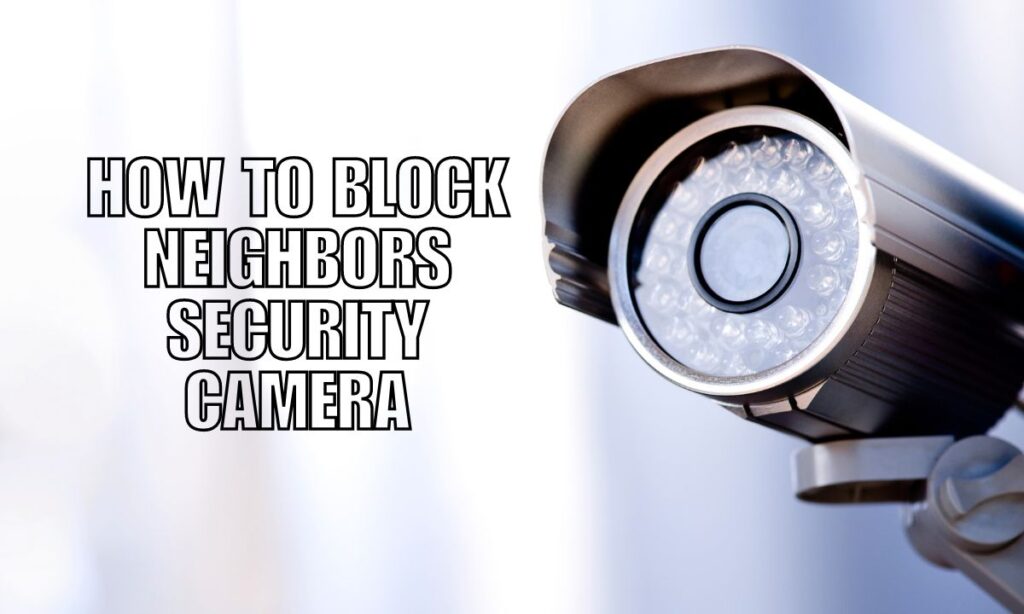
How To Block Neighbors Security Camera: Legal Ways to Protect Your Privacy

How to Block Neighbors Security Camera

When a neighbor’s security camera points toward your property, it creates an awkward situation that affects your peace of mind and sense of privacy. The best way to block your neighbor’s security camera involves installing physical barriers like privacy fences, strategically placing tall plants and shrubs, adding shade sails or outdoor screens, and building decorative structures on your property. These methods work because they create visual obstructions between the camera and your private spaces without interfering with your neighbor’s equipment.

Most people don’t realize their cameras bother anyone until someone speaks up. Your neighbor probably installed their CCTV system thinking about package thieves or vandalism, not about making you uncomfortable. Before you build anything or plant trees, a friendly conversation might solve everything. We’ve seen countless situations resolve with a simple chat over the fence and a slight camera adjustment.

Key Takeaways:

  • Start with conversation – Most neighbors will gladly adjust their cameras once they understand your concerns
  • Physical barriers work best – Fences, screens, and shade structures provide immediate, legal privacy protection
  • Natural solutions look great – Trees, bamboo, and dense shrubs block views while beautifying your yard
  • Know your legal rights – Cameras can’t legally record private spaces like bedroom windows or enclosed yards
  • Document everything – Keep photos and records of the camera’s position in case you need them later
  • Stay on your property – Only install barriers and solutions within your property boundaries
  • Avoid aggressive tactics – Never damage cameras, use lasers, or place items on your neighbor’s land
Callaway security™ ad scaled

Understanding Your Privacy Rights and Security Camera Laws

We need to talk about the legal stuff first because knowing your rights changes how you approach this whole situation. In most places, homeowners can install surveillance systems on their property. That’s their right. But here’s where it gets interesting for you.

Your neighbor’s CCTV camera can legally capture footage of public areas around your home. Your front yard, driveway, and anything visible from the street? Fair game. Security systems routinely record these spaces, and courts consistently uphold this practice. The cameras serve legitimate purposes like deterring burglars, recording suspicious activity, and providing evidence if crimes occur.

However, the law draws a firm line at private spaces. Your enclosed backyard, bedroom windows, bathrooms, and other areas where you’d reasonably expect privacy are off-limits. If surveillance cameras intentionally focus on these spaces, that crosses into illegal territory. In Georgia specifically, state law prohibits using recording devices to observe or capture activities in private places without consent. Breaking this law isn’t a slap on the wrist – we’re talking felony charges with potential prison time and serious fines.

Audio recording adds another layer of complexity to home security setups. Many modern surveillance systems include microphones that capture conversations along with video footage. Georgia operates under one-party consent rules, meaning at least one person in a conversation must agree to the recording. If your neighbor’s system picks up your private backyard conversations without anyone’s knowledge or consent, that could violate state law.

When Surveillance Crosses Legal Boundaries

Cameras become problematic when they deliberately target private areas. A CCTV system angled specifically at your bedroom window isn’t acceptable, even if your neighbor claims it’s for security purposes. The same applies to cameras zoomed in on your enclosed patio where you sunbathe or your kids play in their inflatable pool.

The key word here is “intentional.” If your property appears in the background while a camera monitors your neighbor’s driveway, that’s usually fine. But if they’ve positioned or zoomed their surveillance equipment specifically to watch your private spaces, you’ve got grounds to push back – legally and forcefully.

Starting with Direct Communication: The Most Effective First Step

Here’s something we’ve learned from countless privacy disputes: talking works better than you’d think. Most folks install home security systems because they’re worried about crime, not because they want to spy on neighbors. They probably haven’t considered that their camera makes you uncomfortable.

We recommend approaching this conversation on a sunny afternoon when you’re both outside. Keep it light and friendly. You might say something like, “Hey, I noticed your new security camera. I totally get wanting to protect your home – we’ve thought about getting one too. I wanted to chat because it looks like it might be picking up our backyard. Would you mind if we looked at the angle together?”

This approach works because you’re not accusing them of anything. You’re acknowledging their legitimate security concerns while expressing yours. Most neighbors will immediately offer to adjust the camera or show you what it actually records. Many modern surveillance systems let homeowners mask certain areas, so the camera can still monitor their property while blocking out yours.

Following Up in Writing

If your friendly chat doesn’t lead to changes, we suggest sending a polite written notice. Keep copies of everything. Your letter might reference local privacy ordinances and explain which specific areas concern you. This documentation becomes valuable if you eventually need to involve authorities or seek legal help.

Don’t threaten legal action in your first letter. Instead, frame it as wanting to find a solution that works for everyone. Something like, “I appreciate you taking time to discuss our concerns about your security camera. As we talked about, we’re worried about privacy in our backyard. Would you be willing to adjust the camera angle or add privacy masking? We’re happy to discuss other solutions that protect both our homes.”

Building Physical Barriers for Immediate Privacy Protection

Once you’ve tried talking, it’s time to take control of the situation yourself. Physical barriers give you immediate results and stay completely within your rights because you’re working on your own property.

Installing Privacy Fencing That Works

Fences are your most powerful tool against intrusive surveillance systems. We’re not talking about those wimpy picket fences either. You want solid, tall privacy fencing that blocks sight lines completely.

Before you buy materials or hire contractors, check your local zoning regulations. Most areas limit fence heights – typically six feet for backyard fences and four feet for front yards. Some neighborhoods have HOA restrictions that go beyond city codes. Getting permits might feel like a hassle, but it beats tearing down a fence later because it violates regulations.

If you’ve already got fencing but it’s not quite tall enough, you can add extensions. Lattice panels work great because they add height without creating a fortress vibe. Roll-up bamboo screens attached to the top of existing fences give you extra coverage quickly and cheaply. Some folks install decorative fence toppers that serve double duty as privacy barriers and attractive design elements.

Choosing the Right Fence Materials:

MaterialProsConsPrivacy Level
Solid WoodComplete sight blocking, natural lookRequires maintenance, can warpExcellent
Vinyl Privacy PanelsLow maintenance, weather resistantMore expensive upfrontExcellent
Composite FencingDurable, looks like woodHigher costExcellent
Metal with SlatsModern appearance, sturdyMay have small gapsVery Good
Bamboo ScreeningNatural, affordableShorter lifespanVery Good

Adding Outdoor Privacy Screens and Curtains

Privacy screens offer flexibility that permanent fencing doesn’t. We love outdoor curtains for covered patios because you can pull them closed when using your space and tie them back other times. They’re also perfect for renters who can’t install permanent structures.

Bamboo rolled screens are our go-to recommendation for quick privacy fixes. They’re lightweight, surprisingly durable, and easy to hang on existing structures. You can attach them to pergolas, arbors, or even directly to fence posts. When you don’t need them anymore, roll them up and store them away.

Shade sails deserve special mention because they solve multiple problems at once. These triangular or rectangular fabric pieces stretch between anchor points to create covered spaces. They block overhead surveillance cameras while providing shade and adding visual interest to your yard. Position a shade sail strategically between your patio and your neighbor’s camera, and you’ve created an effective privacy barrier that looks intentional and designed.

Shade Sail Installation Tips

Installing shade sails properly matters more than you’d think. Each anchor point handles roughly 100 pounds of tension when the sail is properly tightened. That means you need seriously sturdy mounting points – either existing structures like your house or deck, or dedicated posts sunk deep in concrete.

Tilt one corner lower than the others by about 25%. This lets rainwater run off instead of pooling in the middle. A sagging, water-filled shade sail looks terrible and could damage the fabric or pull down your anchor points.

Natural Solutions: Landscaping for Long-Term Privacy

We’ll be honest – trees and shrubs won’t solve your problem next week. But if you’re thinking long-term, strategic landscaping creates beautiful, natural privacy barriers that increase your property value while blocking unwanted surveillance.

Fast-Growing Trees That Deliver Results

Some trees grow surprisingly fast. Arborvitae, our top pick for privacy screening, can shoot up three feet per year in good conditions. Plant them along your property line, and within a couple years, you’ve got a living wall between your space and that camera.

Bamboo grows even faster but comes with warnings. Clumping bamboo varieties stay contained, but running bamboo spreads aggressively through underground roots. We’ve seen running bamboo invade entire neighborhoods when not properly contained. If you go with bamboo, install root barriers at least two feet deep around your planting area.

Leyland cypress trees grow quickly and create thick coverage year-round. They can reach 50 feet tall and form dense screening perfect for blocking sight lines. Italian cypress gives you a similar effect with a more formal, Mediterranean look.

Top Privacy Trees and Shrubs:

  • Emerald Green Arborvitae – Grows 3-5 feet yearly, reaches 12-14 feet tall, stays narrow
  • Leyland Cypress – Fast growth up to 50 feet, dense evergreen foliage
  • Bamboo (Clumping varieties) – Extremely fast growth, can reach 20-30 feet
  • Skip Laurel – Dense shrub reaching 10-18 feet, tolerates various conditions
  • Thuja Green Giant – Rapid growth to 50 feet, naturally pyramidal shape
  • Holly Trees – Year-round coverage, attractive berries, very dense

Using Container Plants for Flexible Privacy

Can’t plant directly in the ground? Large containers filled with tall ornamental grasses or bamboo give you instant height exactly where you need it. We’re talking about serious planters here – those half-barrel sized containers that won’t blow over in wind.

Tall grasses like miscanthus or pampas grass reach six to eight feet in a single season. Line several large containers along your fence, and you’ve created a flexible privacy screen that moves if you change your mind about placement.

Climbing vines on trellises create living walls faster than you’d expect. Clematis, climbing roses, and honeysuckle grow quickly and densely when given proper support. Build or buy tall trellises and position them to block the camera’s sight lines. Within one growing season, you’ll have thick, beautiful coverage.

Creative Approaches to Discourage Surveillance

Sometimes thinking outside the box solves problems that direct methods don’t. These creative solutions work by making the camera less effective or encouraging your neighbor to adjust their system voluntarily.

Motion Detection Disruption

Many home security systems use motion detection to start recording or send alerts. We can use this feature against itself – ethically and legally. Large flags, windsocks, or decorative wind spinners placed in the camera’s view constantly trigger motion alerts. Your neighbor’s phone starts blowing up with false notifications every time the wind blows.

Eventually, they’ll either adjust the camera angle to avoid your property or dial down the motion sensitivity so much that the camera becomes less effective. Either way, you win.

Wind chimes, hanging mobiles, and even bird feeders create constant movement that overwhelms motion detection systems. The key is placing these items on your property, within the camera’s field of view, but positioned so they’re clearly on your side of the property line.

Building Decorative Structures with Privacy Benefits

Gazebos and pergolas serve multiple purposes in your yard. They create attractive outdoor living spaces, add property value, and block overhead sight lines from elevated cameras. A pergola with a solid roof or tightly spaced slats prevents cameras from seeing down into your patio or deck area.

We’ve seen homeowners get super creative with privacy walls. One person mounted large artistic panels along their fence line – beautiful metal artwork that happened to perfectly block their neighbor’s camera view. Another installed a series of tall, decorative birdhouses and bat boxes that created visual barriers while supporting local wildlife.

Arbors work great for entry points into garden areas. Add a roof or top covering, and you’ve blocked overhead surveillance while creating an attractive architectural feature. Train flowering vines up the sides, and nobody would guess your arbor’s primary purpose is privacy protection.

What You Should Never Do

Frustration might tempt you toward aggressive solutions, but these tactics will backfire. They’re illegal, dangerous, or both, and they’ll turn you from the victim into the bad guy.

Actions That Lead to Legal Trouble

Never, ever damage or tamper with your neighbor’s surveillance equipment. We don’t care how tempting it seems when you’re angry about privacy violations. Spray painting the lens, cutting wires, knocking the camera down – all these actions constitute vandalism or property destruction. You’ll face criminal charges and probably civil lawsuits too.

Lasers and bright lights pointed at cameras might seem clever, but they’re considered vandalism in most jurisdictions. Some folks have faced serious charges for blinding cameras with laser pointers. Beyond the legal issues, you could damage someone’s vision if they’re adjusting the camera when you shine a laser at it.

Don’t climb into your neighbor’s yard to adjust, cover, or otherwise mess with their security system. That’s trespassing, and if you damage anything while there, you’re looking at multiple charges. Everything we recommend happens on your property, where you have every right to install barriers, plant trees, and build structures.

Chemical solutions – spraying substances on cameras, cutting wires with corrosive materials, or similar sabotage – escalate situations dangerously. You’re now dealing with potential assault charges if someone gets hurt, plus property damage and possibly chemical weapons charges depending on what you used.

When Friendly Solutions Fail: Escalation Steps

Sometimes neighbors refuse to cooperate, even when their cameras clearly invade your privacy. We hate that you’re in this position, but you’ve got options beyond just accepting the situation.

Community Mediation Services

Most cities offer free or low-cost mediation services for neighbor disputes. A neutral third party helps both sides communicate and find compromise solutions. Mediation works surprisingly well because it forces everyone to actually listen instead of just waiting for their turn to talk.

Your neighbor might feel defensive discussing the issue directly with you but opens up with a mediator present. The mediator can suggest solutions neither of you considered and help frame compromises that protect everyone’s interests.

Documenting Your Case

Start gathering evidence now if you haven’t already. Take photos showing the camera’s exact position and angle. Stand in various spots around your property and photograph what the camera can see. These images prove whether the surveillance system captures private areas like bedroom windows or enclosed yards.

Keep written records of every conversation about the camera. Note dates, times, what was said, and any promises made. Save copies of letters, emails, or text messages. This documentation becomes crucial if you eventually need to involve police or lawyers.

Take photos periodically showing the camera hasn’t moved or changed angles. If your neighbor claims they adjusted it months ago, your dated photos prove otherwise.

Involving Local Authorities

Contact your local police department’s non-emergency line to discuss your options. Explain the situation and ask whether the camera placement violates any local ordinances. Some cities have specific regulations about surveillance systems – maximum mounting heights, restrictions on recording neighboring properties, or requirements for signage.

Your city’s code enforcement or planning department might have regulations that apply even if police can’t help. Some jurisdictions require permits for camera installations or prohibit cameras that record beyond the property owner’s boundaries.

If the camera clearly violates your privacy by recording private spaces, file a formal complaint. Police might speak with your neighbor about the legal issues, which often prompts quick changes even without charges being filed.

Legal Action as a Last Resort

When everything else fails and the camera seriously invades your privacy, consult an attorney who handles property disputes or privacy law. If surveillance equipment records your bedroom windows, enclosed backyard, or other genuinely private spaces, you might have grounds for a lawsuit.

In Georgia, state law explicitly prohibits using devices to observe or record activities in private places without consent. An attorney can send a formal cease-and-desist letter explaining the legal violations and threatening court action if the situation doesn’t change. Often, a lawyer’s letter motivates cooperation when friendly requests didn’t.

You might pursue an injunction forcing your neighbor to remove or reposition the camera. In extreme cases, you could seek damages for invasion of privacy. These lawsuits aren’t cheap or quick, but sometimes they’re necessary to protect your rights.

Putting It All Together: Your Action Plan

The most effective privacy protection combines multiple strategies working together. We recommend this step-by-step approach:

Week 1: Have a friendly conversation with your neighbor about the camera. Explain your privacy concerns calmly and listen to their security worries. Suggest simple solutions like adjusting the angle or adding privacy masking to their system.

Week 2-3: If conversation doesn’t work, send a polite written notice referencing your discussion and requesting changes. Give them a reasonable deadline to respond – maybe two weeks.

Week 4+: While waiting for response, start implementing solutions on your property. Order privacy screening, research fence options, or plan landscaping projects. Don’t wait to protect your privacy.

Ongoing: Install physical barriers like privacy fences or screens for immediate results. Begin landscaping with fast-growing trees and shrubs for long-term natural coverage. Add decorative structures that serve dual purposes.

If needed: If problems continue after reasonable efforts, escalate through mediation, code enforcement, or legal counsel.

Frequently Asked Questions About Blocking Security Cameras

Can I legally blind my neighbor’s security camera with lights or lasers?

No, using lights or lasers to blind surveillance cameras is illegal and considered vandalism in most places. These actions can damage expensive equipment and potentially harm people. Instead, we recommend legal privacy solutions like installing fences, screens, or planting trees on your property to block the camera’s view naturally.

How do I know if my neighbor’s camera is recording audio from my yard?

Many modern security systems include audio recording, but it’s tough to tell just by looking. If you’re concerned, try having a conversation in your yard while holding a radio or playing music. Later, politely ask your neighbor if their system captured audio. In Georgia, recording private conversations without consent violates state law, so if their system picks up your backyard discussions, they might be breaking the law.

What’s the fastest way to block a neighbor’s camera view?

Installing outdoor privacy screens or shade sails provides the quickest results – often within a single afternoon. Bamboo roll-up screens attached to existing fences or posts block views immediately and cost less than $50 for most applications. For permanent solutions, privacy fencing takes a few days to install but completely blocks sight lines. Trees and shrubs look better but need 1-2 years to grow tall enough for effective coverage.

Can my neighbor legally point their security camera at my backyard?

It depends on your backyard setup and local laws. If your backyard is visible from the street or their property, cameras can generally record it. However, if you have a fully enclosed backyard with a privacy fence where you’d reasonably expect privacy, intentionally recording it may violate state privacy laws. In Georgia specifically, recording activities in private places without consent is illegal. Document the camera’s angle and consult local authorities if you believe it crosses legal boundaries.

Will building a tall fence require permits and approval?

Almost certainly yes. Most cities regulate fence heights – typically limiting backyard fences to six feet and front yard fences to four feet, though regulations vary widely. Some neighborhoods have HOA rules with additional restrictions about fence styles, materials, and colors. Check with your city’s building department and review your HOA documents before installing fencing. Getting proper permits avoids having to tear down your fence later and prevents fines.

Protecting Your Privacy While Maintaining Peace

We get it – dealing with intrusive surveillance cameras frustrates anyone who values their privacy. The good news is you’ve got plenty of legal, effective options to block unwanted camera views and reclaim your comfortable outdoor space.

Remember that most neighbors aren’t trying to spy on you. Their security systems aim to protect their property, and they probably haven’t realized their cameras make you uncomfortable. Starting with polite conversation resolves most situations without conflict or expense.

For stubborn cases, the physical barriers, landscaping solutions, and creative approaches we’ve discussed give you powerful tools to protect your privacy. Focus on solutions you can implement on your own property, where you have complete control and no legal worries.

The key is acting strategically rather than emotionally. Document everything, know your legal rights, and escalate gradually from friendly conversation through formal complaints if necessary. With patience and the right approach, you can block that intrusive camera while maintaining civil relations with your neighbors – or at least establishing clear boundaries that protect your privacy rights.

Your home should feel like your private sanctuary, not a place where you’re constantly watched. Take control of the situation with these proven strategies, and you’ll soon enjoy your outdoor spaces comfortably again.

Looking to better secure your home or business? Trust Callaway Security™ for all your security system needs. Our expert team will provide you with top-notch home and business security solutions tailored to your specific requirements. Don’t compromise on your safety and contact us today.

Callaway Security Logo

Looking for Home Security?

We're Just A Call-Away!