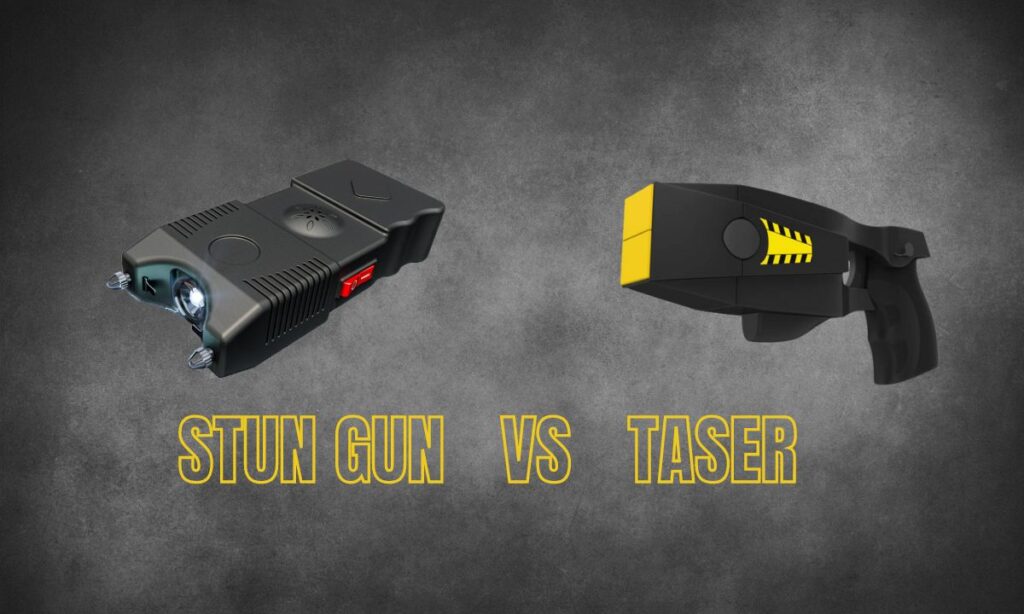
A stun gun requires you to press it directly against someone’s body to deliver an electric shock, while a taser fires projectile prongs from up to 15 feet away that can temporarily override muscle control. The key split comes down to contact versus distance—stun guns work only when you’re close enough to touch your attacker, whereas tasers let you stop a threat before they even reach you.
When we’re talking about personal protection, understanding these electroshock devices can literally mean the difference between staying safe and getting hurt. Both tools pack an electrical punch designed to stop aggressive behavior, but they accomplish this goal through completely different methods. We’ve all seen police officers on TV deploying these devices, yet most folks don’t realize they’re looking at two distinct pieces of equipment with their own strengths, weaknesses, and real-world applications.
Key Takeaways:
- Contact matters most: Stun guns demand physical touch with an attacker’s body, putting you within arm’s reach of danger, while tasers create a 15-foot safety buffer between you and the threat.
- Price points vary wildly: We can grab a decent stun gun for as little as $20 to $50, but tasers will set us back anywhere from $399 to over $1,500 depending on the model and features.
- Different stopping power: Stun guns cause sharp pain and brief confusion that stops when contact ends, whereas tasers disrupt the nervous system’s ability to control muscles, creating longer-lasting incapacitation.
- Legal landscapes shift: Both devices face varying restrictions across states and cities—some places ban them outright, others require permits, and a few allow open carry with no paperwork needed.
- Clothing creates complications: Thick jackets, heavy coats, and layered clothing can reduce a stun gun’s effectiveness significantly, while taser prongs are designed to penetrate through fabric barriers.
- Training requirements differ: We can figure out a basic stun gun pretty quickly, but tasers demand more practice to aim accurately and understand the cartridge replacement system after each deployment.
If you are concerned for your safety, contact Callaway Security and Sound for a full home security system in Atlanta, GA.

How Electric Defense Weapons Actually Work
The Science Behind the Shock
Both stun guns and tasers rely on electricity to disrupt normal body functions, but they harness that power in fundamentally different ways. We’re dealing with high voltage and low amperage in both cases—this combination creates intense pain without causing permanent damage to internal organs or the heart in most situations. Think of voltage as the pressure pushing electrons through a circuit, while amperage measures the actual flow of electricity. A typical household outlet delivers 120 volts at 15 amps, which can kill you. These defense tools flip that ratio, delivering anywhere from 50,000 to several million volts but keeping amperage incredibly low (usually under 5 milliamps).
When we look at stun guns specifically, they create an electrical arc between two or more metal prongs. Pressing these prongs against someone’s body completes the circuit, sending that electrical current through their skin and into muscle tissue beneath. The shock overwhelms the nervous system’s normal signals, causing pain, muscle contractions, and mental fog. It’s similar to touching an electric fence—unpleasant and startling, but not typically dangerous if exposure is brief.
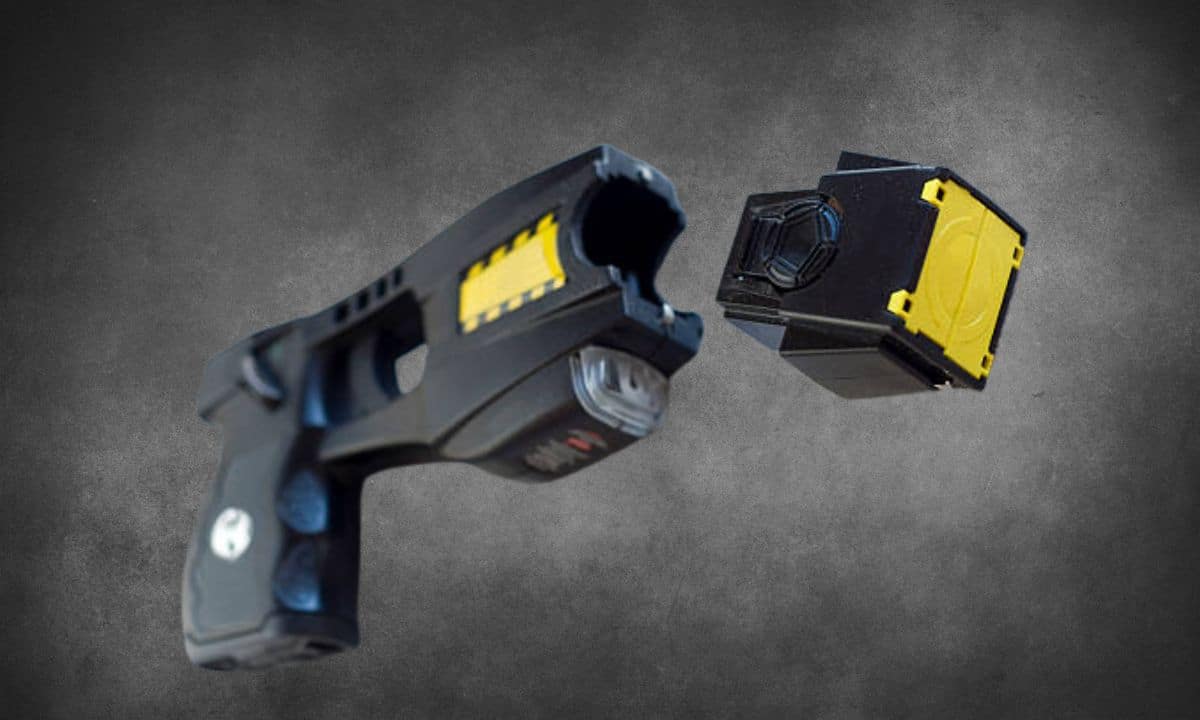
Tasers operate through conducted electrical weapons technology, which sounds fancy but really means they use thin wires to deliver electricity at a distance. When we pull the trigger on a taser gun, compressed nitrogen gas launches two small probes attached to insulated copper wires. These prongs stick into clothing or skin, and once they make contact, the taser pumps electrical pulses through those wires into the target’s body. The X2 Taser and similar law enforcement models can even fire a second set of probes if the first shot misses, giving officers a backup option.
Physical Effects on the Human Body
We need to understand what actually happens when someone gets hit with these devices. A stun gun causes what we call “pain compliance”—basically, it hurts so much that people instinctively want it to stop, so they tend to freeze or back off. The electrical current makes muscles contract involuntarily, creates a burning sensation, and can cause temporary paralysis in the specific area where contact occurs. Once we remove the device, though, that person will usually recover their full capabilities within seconds to minutes.
Getting tasered is a completely different experience. The electrical charge from a taser doesn’t just cause pain; it creates “neuromuscular incapacitation,” which is a technical way of saying it hijacks your body’s ability to control its own movements. We’re talking about every muscle between those two prongs contracting simultaneously and uncontrollably. People who’ve been tasered describe feeling like their whole body locks up—they can’t move, can’t think clearly, and often fall straight to the ground. This effect typically lasts for the duration of the electrical cycle (usually 5 seconds) and can leave someone disoriented for several minutes afterward.
The taser shock gun effect works regardless of pain tolerance, mental state, or even drug intoxication in many cases. That’s why law enforcement agencies prefer them—a taser versus stun gun comparison shows that tasers work on people who might be too aggressive, drugged up, or mentally unstable to respond to pain alone.
Stun Guns: Up Close and Personal Protection
Design and Practical Use
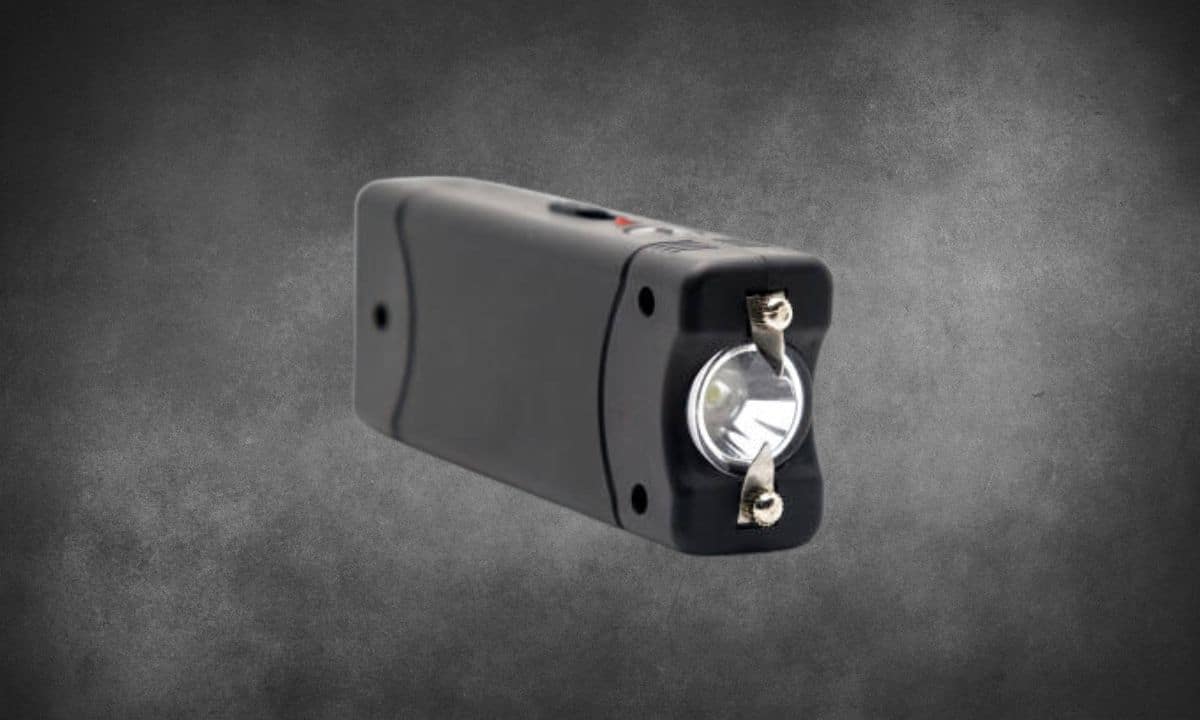
Stun guns come in more shapes and sizes than we can count. We’ve got models that look like flashlights, ones built into phone cases, lipstick-shaped versions, and even disguised as everyday items. The most common design features two metal prongs sticking out from a handheld device, often with a trigger or button to activate the electrical discharge. Many units include built-in LED lights, safety switches to prevent accidental discharge, and rechargeable batteries so we don’t have to keep buying replacements.
Using a stungun effectively requires getting dangerously close to an attacker—we’re talking about arm’s length or less. The recommended technique involves pressing the device firmly against a major muscle group (like the shoulder, thigh, or lower torso) and holding it there for 3-5 seconds if possible. Longer contact times increase the likelihood of dropping the attacker, though even a brief zap can create enough surprise and pain to give us a chance to run away.
The reality check here is that stun gun use demands we stay in the danger zone. If someone’s grabbing us, trying to hurt us, or getting aggressive, we have to let them get within touching distance before our defense tool even works. For some people, especially those with mobility issues or size disadvantages, this close proximity presents a serious problem.
Limitations We Can’t Ignore
Clothing throws a wrench into stun gun effectiveness. A thick winter coat, leather jacket, or even multiple layers of regular clothes can block or significantly reduce the electrical current reaching someone’s body. We might press that stun gun against someone bundled up for winter and get minimal results, which is why understanding this limitation matters so much when we’re choosing personal protection options.
Another factor we don’t always consider: stun guns can be turned against us. If an attacker manages to grab our wrist or knock the device out of our hand during a struggle, we’ve just armed them with our own defense tool. The physical proximity required for contact creates opportunities for the aggressor to disarm us or power through the pain long enough to take control of the situation.
That said, stun guns offer real advantages too. They’re lightweight, easy to carry, simple to operate, and affordable enough that we can buy one without breaking the bank. For someone who wants basic protection while jogging in familiar neighborhoods, walking to their car in parking garages, or keeping something in a nightstand for home security, a quality stun gun provides a reasonable option.
Tasers: Distance Defense Technology
How Taser Guns Function
When we examine a proper taser gun, we’re looking at significantly more sophisticated engineering than a basic stun gun. The device contains compressed gas cartridges, complex electrical circuits, targeting systems (often with laser sights), and those wire-connected prongs we mentioned earlier. Pulling the trigger releases the probes, which can travel up to 15 feet in models designed for civilians and even farther in law enforcement versions.
The electroshock gun launches two prongs that need to spread apart as they fly toward the target. This spread is crucial because the effectiveness of the taser depends on how far apart those prongs land on the body. Greater separation means the electrical current passes through more muscle groups, creating better incapacitation. Aim for the center mass of the body—chest or back—and let the probes do their job spreading out naturally.
After we fire a taser, the cartridge needs replacing before we can shoot again (unless we have an X2 taser or similar multi-shot model). Many people don’t realize this limitation until it’s too late. We get one shot, maybe five seconds of electrical incapacitation, and then we either need a backup cartridge or we’re left with a drive-stun option. Drive-stunning means pressing the taser directly against someone’s body like a stun gun, but this defeats the main purpose of having a taser in the first place.
Advantages Over Contact Weapons
The range of taser devices gives us breathing room that stun guns simply can’t match. We can stop a threat before they reach grabbing distance, which is huge when we’re talking about personal protection. Someone running at us aggressively can be dropped at 10 or 12 feet away, preventing them from ever making physical contact.
The taser gun vs stun gun debate often comes down to effectiveness under extreme circumstances. We mentioned earlier that tasers work through neuromuscular incapacitation rather than pain compliance. This means they’re more likely to stop someone who’s extremely aggressive, under the influence of drugs or alcohol, or experiencing a mental health crisis—situations where pain might not register or motivate them to back off.
Do tasers work through clothes? Yes, much better than stun guns. The prongs are designed to penetrate fabric, and the electrical charge travels through clothing to reach the body underneath. Even relatively thick materials won’t completely block a properly deployed taser, though extremely heavy winter gear or certain types of body armor might reduce effectiveness.
The Price of Protection
Here’s where we hit a wall for many people considering these options: tasers are expensive. A consumer-grade electric gun from a reputable manufacturer like Axon (the company that makes TASER-brand devices) runs between $399 and $599. Law enforcement models with additional features, multiple cartridges, and advanced technology can exceed $1,500. On top of the initial purchase, replacement cartridges cost $20 to $40 each, and we need a new one after every deployment.
Compare that to affordable taser gun alternatives like quality stun guns, which we can pick up for $20 to $100 depending on features and brand reputation. For someone on a tight budget trying to add some personal security, that price difference might make the decision for them regardless of which option performs better.
Legal Considerations Across the United States
State-by-State Variations
We can’t stress this enough: check your local laws before buying any electroshock weapon. The legal landscape is a patchwork mess of state regulations, city ordinances, and county rules that change depending on where we live, work, or travel. Some states treat stun guns and tasers identically, while others regulate them completely differently.
As of now, states like Rhode Island, Hawaii, and New York have historically imposed strict restrictions or outright bans on civilian ownership of these devices, though some of these laws have been challenged or modified in recent years. Connecticut requires a permit for stun guns but has different rules for tasers. Massachusetts banned these devices for years before laws changed. New Jersey has complex regulations around ownership and carry. Illinois restricts where we can carry them even if ownership is legal.
On the flip side, states like Texas, Arizona, Georgia, and much of the South and Midwest allow relatively unrestricted ownership and carry of both stun guns and tasers for adults over 18 or 21 (age requirements vary). But even in these states, we can’t carry them into certain locations like schools, government buildings, airports, or private property where they’re prohibited.
Liability and Responsible Ownership
Using any self-defense weapon creates potential legal liability. If we deploy a stun gun or taser against someone, we need to be able to justify that use as reasonable force in response to a legitimate threat. We can’t zap someone for cutting in line, arguing with us, or even threatening us verbally in most situations. The threat needs to be immediate and physical, and our response needs to be proportional.
We’ve also got to consider the potential for injury or death, even though these devices are marketed as “non-lethal” or “less-lethal.” People with heart conditions, those on certain medications, pregnant individuals, and others with medical vulnerabilities can face serious complications from electroshock weapons. If we use one of these devices and the person gets seriously hurt or dies (which happens in rare cases), we might face criminal charges or civil lawsuits even if the initial use seemed justified.
Responsible ownership means training ourselves on proper use, understanding our equipment’s limitations, maintaining the device correctly, and honestly assessing whether we’re mentally and emotionally prepared to use it if necessary. These aren’t toys, and treating them casually creates danger for everyone involved.
Choosing the Right Option for Personal Protection
Assessing Your Specific Needs
We need to think about our actual day-to-day life and realistic threats when choosing between these options. Someone who works late nights in urban areas with higher crime rates might benefit from a taser’s distance capability. A college student living on campus where tasers might be restricted but stun guns are allowed has a different set of considerations. A person with limited mobility who couldn’t run away even after deploying a stun gun might need to rethink whether either option makes sense or if they should look at other defensive tools altogether.
Consider your physical capabilities honestly. Can we aim a taser accurately under stress? Will we remember to check that the safety is off when adrenaline hits? Are we comfortable getting close enough to use a stun gun, or does that proximity feel too risky? There’s no shame in acknowledging our limitations—better to figure this out now than in a dangerous situation.
Our living situation matters too. Someone in a ground-floor apartment might prioritize home defense differently than someone in a fourth-floor walkup. People who travel frequently need to think about transportation security rules (spoiler: we can’t bring either device on commercial flights in carry-on bags). Those of us with children or pets at home need to consider storage and safety to prevent accidents.
Stun Gun vs Taser for Women
We see a lot of marketing aimed at women for both types of devices, often emphasizing compact sizes, “fashionable” designs, or easy concealment. While there’s nothing wrong with these features, we should focus on effectiveness and practicality first. A taser for women works the same way as one marketed to men—the distance advantage might actually be more valuable for someone who’s statistically more likely to face larger, stronger attackers.
That said, many women prefer the lower profile and easier concealment of stun guns. They fit in purses, pockets, or hands more discreetly. Some models look like innocuous objects, which means we’re not advertising that we’re carrying a defense weapon. The trade-off is that contact requirement, which might put us in more danger during an attack.
The best stun gun thug style defense approach (if we’re being real about street terms) combines the device with situational awareness, verbal de-escalation skills, and an exit strategy. No gadget replaces being alert to our surroundings, trusting our instincts about sketchy situations, and having a plan to get away from danger.
Training and Practice
We can’t just buy a defense weapon and assume we’ll know how to use it effectively under stress. Even simple stun guns benefit from practice—learning how to draw it quickly, disable the safety, and deploy it confidently takes repetition. For tasers, we need to practice aiming (use the training cartridges that don’t fire live prongs), learn how to reload cartridges quickly, and understand what to do if our first shot misses.
Many ranges and training facilities now offer courses specifically for civilian electroshock weapon use. These classes teach us proper techniques, legal considerations, scenario training, and stress inoculation so we’re not completely frozen if we actually need to use the device. The investment in training often matters more than the specific weapon we choose.
Comparing Related Self-Defense Options
Cattle Prods and Other Electric Tools
People sometimes ask about taser vs cattle prod effectiveness for self-defense. Here’s the deal: cattle prods are designed to annoy large animals into moving, not to incapacitate threats. They deliver lower voltage and aren’t optimized for human defensive use. While they’d certainly hurt if jabbed into someone, they’re not purpose-built self-defense tools and come with their own legal complications. Stick with actual stun guns or tasers rather than improvising with agricultural equipment.
Pain Devices and Impact Tools
We should briefly mention that electroshock weapons aren’t the only non-lethal options out there. Pepper spray, personal alarms, impact weapons like kubatons or tactical pens, and even martial arts training all provide alternatives or supplements to stun guns and tasers. Each tool has its own advantages and drawbacks:
Pepper Spray works at range like tasers but can be affected by wind, might blow back into our faces, and creates an area effect that could contaminate us too. It’s often cheaper than either electroshock option and legal in more places, but requires different deployment tactics.
Personal Alarms create loud noise to attract attention and potentially scare off attackers. They’re legal everywhere, cost almost nothing, and can’t be used against us like a stun gun could. However, they rely on someone hearing the alarm and coming to help, which might not happen in isolated areas.
Impact Weapons require closer contact than tasers but different techniques than stun guns. They depend entirely on our physical ability to strike effectively and might cause more visible injury, which creates different legal considerations.
Technical Specifications That Matter
Voltage Myths and Realities
We see stun gun advertisements screaming about millions of volts, and it’s easy to think higher voltage automatically means better stopping power. Is voltage important for stun guns? Yes and no. The voltage needs to be high enough to arc across the gap and penetrate clothing, but beyond a certain threshold, more voltage doesn’t necessarily equal better results. What matters more is the charge delivery system, amperage levels, pulse patterns, and overall build quality.
A device claiming 10 million volts that’s poorly made might be less effective than a quality 1 million volt unit from a reputable manufacturer. Look for real-world reviews, demonstrated effectiveness, and the company’s reputation rather than just chasing the biggest voltage numbers in the ad copy.
Battery Life and Maintenance
Both stun guns and tasers rely on batteries to function, and a dead battery means a useless defense tool. Most modern stun guns use rechargeable lithium-ion batteries that last for years with proper care. We should test them monthly to ensure they hold a charge and maintain a consistent spark. Keep them charged but don’t leave them plugged in constantly, which can degrade battery life over time.
Tasers use replaceable or rechargeable batteries depending on the model. Law enforcement versions often have battery indicators and alert systems when power runs low. Consumer models might be less sophisticated, so we need to stay on top of maintenance ourselves. The compressed gas cartridges also have expiration dates—yes, really—and should be replaced periodically even if unused.
Real-World Effectiveness and Limitations
Success Rates in Actual Defensive Use
Do stun guns knock you out? Not typically in the Hollywood sense of someone crumpling unconscious for minutes or hours. In reality, stun guns cause temporary pain, disorientation, and local muscle contractions that last only as long as we maintain contact plus a brief recovery period. The person will usually be fully functional within seconds to a minute after contact stops, which means we need to use that window to escape, not stand around expecting them to be “knocked out.”
Tasers have a better track record for creating longer-lasting incapacitation, but they’re not foolproof either. Police studies show that tasers fail to incapacitate targets in roughly 15-40% of deployments, depending on the study and circumstances. Factors affecting this include probe spread, clothing, body composition, drug or alcohol intoxication, mental state, and whether both prongs make good contact. When tasers work as designed, they’re highly effective. When something goes wrong, we’re left with a very expensive paperweight and a threat who’s now even angrier.
Do Stun Guns Hurt?
Let’s be straight: yes, stun guns hurt quite a bit. Descriptions from people who’ve been shocked during training include “like grabbing an electric fence,” “muscles going crazy,” “burning pain,” and “completely unpleasant.” The intensity varies based on voltage, contact duration, and where on the body contact occurs. Hitting sensitive areas or major muscle groups creates more intense reactions.
However, pain tolerance varies wildly among individuals. Someone highly motivated, under the influence of drugs, or experiencing certain mental health crises might push through the pain that would stop most people. This is where the difference between pain compliance (stun gun) and neuromuscular incapacitation (taser) becomes really important. Pain only works if the person cares about pain.
Additional Safety Considerations
Accidental Discharge and Storage
We need to talk about accidents because they happen more often than we’d like to admit. Stun guns accidentally discharged in pockets have burned people. Tasers stored improperly have been found by children with tragic results. Any defensive weapon requires responsible storage—locked up when not on our person, kept away from kids and unauthorized users, and stored with safety mechanisms engaged.
Many modern devices include multiple safety features: trigger guards, safety switches that must be disengaged before use, and even biometric locks on high-end models. We should use all available safety features and treat these devices with the same respect we’d give any other potentially dangerous tool.
Medical Considerations
People with pacemakers, implanted defibrillators, heart conditions, or neurological disorders face higher risks from electroshock weapons. Pregnant women should avoid being tased or stunned if at all possible. Those on certain medications or with mental health conditions might react unpredictably to electrical shock.
If we successfully use a stun gun or taser against an attacker, we should notify emergency services afterward even if we’ve left the area. The person might need medical attention, and from a legal standpoint, reporting the incident creates documentation of what happened from our perspective.
Understanding the Industry and Market
Brand Names and Quality
“Taser” is actually a brand name owned by Axon Enterprise, though it’s become so common that people use it generically like “Kleenex” or “Band-Aid.” Genuine TASER-brand devices represent the gold standard for conducted electrical weapons, backed by extensive research, law enforcement adoption, and quality control. However, they’re also the most expensive option for civilians.
The stun gun market is flooded with devices of varying quality. We’ve got reputable manufacturers producing reliable equipment, but we’ve also got cheap imports that might not work when needed or could even be dangerous to the user. Look for brands with established reputations, verified reviews from real users, warranty support, and certification from relevant testing organizations.
Future Technology Developments
The electroshock weapon field continues to evolve. We’re seeing wireless taser gun concepts that don’t require wire-tethered prongs, smart devices with Bluetooth connectivity and app integration, combination tools that merge stun guns with flashlights and alarms, and better battery technology for longer-lasting charges. Some companies are developing completely new approaches to less-lethal defense that might change this landscape in coming years.
Frequently Asked Questions
What is the difference between a taser and a stun gun in terms of stopping power?
A taser disrupts the entire neuromuscular system when prongs land properly, causing involuntary muscle contractions throughout the affected area that prevent coordinated movement for the duration of the electrical cycle (typically five seconds). A stun gun creates localized pain and temporary muscle dysfunction at the point of contact, but once contact stops, the effects usually fade within seconds to minutes. The taser shock gun effect is generally more reliable for actually stopping a determined attacker because it works regardless of pain tolerance, while stun guns depend on the person’s response to pain.
Can both devices work through heavy winter clothing or jackets?
Tasers are specifically engineered to penetrate clothing barriers—the prongs deploy with enough force to go through most fabrics including denim, leather, and winter coats, and the electrical charge conducts through the clothing to reach skin. Stun guns struggle significantly with thick clothing because the electrical arc must jump across the gap between prongs and skin; heavy coats, multiple layers, or thick materials like leather can block or dramatically reduce the charge reaching the body. If we’re wearing heavy clothing in winter months, a taser offers much better reliability for self-defense situations.
Do we need special permits or licenses to own and carry these devices?
Requirements vary dramatically by location—some states allow anyone over 18 to purchase and carry both stun guns and tasers with no permit required, while others restrict one or both devices through permitting systems, background checks, or complete bans. Cities and counties sometimes impose additional restrictions beyond state law. We absolutely must research the specific laws in our state, county, and city before purchasing, and if we travel with these devices, we need to know the laws everywhere we’re going because what’s legal at home might be a felony across state lines.
Which option works better for someone with limited physical strength or mobility issues?
Tasers generally offer better options for people with strength or mobility limitations because they work at range and don’t require physical contact with an attacker—we can stop a threat from 10 to 15 feet away without needing to overpower them or escape after deployment. Stun guns require close proximity and maintaining contact for several seconds, which might be difficult or dangerous for someone who couldn’t physically resist being grabbed or who couldn’t run away after deploying the device. However, tasers are more expensive, require better aim under stress, and demand cartridge replacement after each use, so we need to weigh these practical considerations against the safety advantages.
What happens if our stun gun or taser doesn’t stop the attacker?
If a defensive device fails to stop a threat, we need an immediate backup plan—this might mean deploying pepper spray, using a personal alarm to attract attention, physically fighting back if trained, or running away if possible. We should never rely exclusively on any single defensive tool without thinking through what happens if it doesn’t work. For stun guns, failure usually means we’re in extremely close quarters with an angry attacker who knows we’re armed. For tasers, a miss or malfunction leaves us with an expensive paperweight unless we have backup cartridges or can quickly close distance to drive-stun. The harsh reality is that no self-defense tool offers 100% effectiveness, which is why defensive training emphasizes awareness, avoidance, and multiple response options.
Making the Smart Choice: Distance Versus Contact
We’ve covered a ton of ground looking at electroshock weapons for personal protection. The core distinction between stun guns and tasers boils down to that fundamental question: do we want to stop threats at a distance or are we comfortable with close-quarters contact? Both devices deliver electrical charges to interrupt an attacker’s ability or willingness to hurt us, but they accomplish this through completely different mechanisms with their own advantages and limitations.
For most people prioritizing maximum safety, a quality taser gun offers better protection despite the higher cost—keeping 15 feet between us and danger makes a huge difference in how situations unfold. That distance gives us time to react, room to escape, and protection from physical grabbing or striking. The neuromuscular incapacitation effect works more reliably across different types of threats than the pain compliance approach of stun guns.
However, we can’t ignore practical realities. Budget constraints are real, legal restrictions vary wildly, and some folks simply feel more comfortable with a simpler tool they can master quickly. A good stun gun in the hands of someone trained and alert beats an expensive taser sitting at home because it seemed too complicated. The best defensive tool is the one we’ll actually carry, maintain properly, and deploy effectively if needed.
Whatever we choose, we need to commit to responsible ownership: learning our local laws, training with the device regularly, maintaining it properly, storing it safely, and honestly assessing whether we’re prepared mentally and emotionally to use it. These tools exist to help us get away from danger, not to win fights or punish attackers. Our goal should always be escaping safely, with the stun gun or taser serving as a tool to create that opportunity.
Personal protection is deeply individual—what works for us might not suit someone else’s circumstances, capabilities, or comfort level. We’ve laid out the facts, cleared up common confusion, and provided the context needed to make an informed decision. Now it’s up to each of us to evaluate our own situations and choose the option that makes the most sense for our lives. Stay safe out there, stay legal, and remember that awareness and avoidance beat any defensive gadget every single time.-enforcement-grade Taser, we’re making a move toward safety and peace of mind.