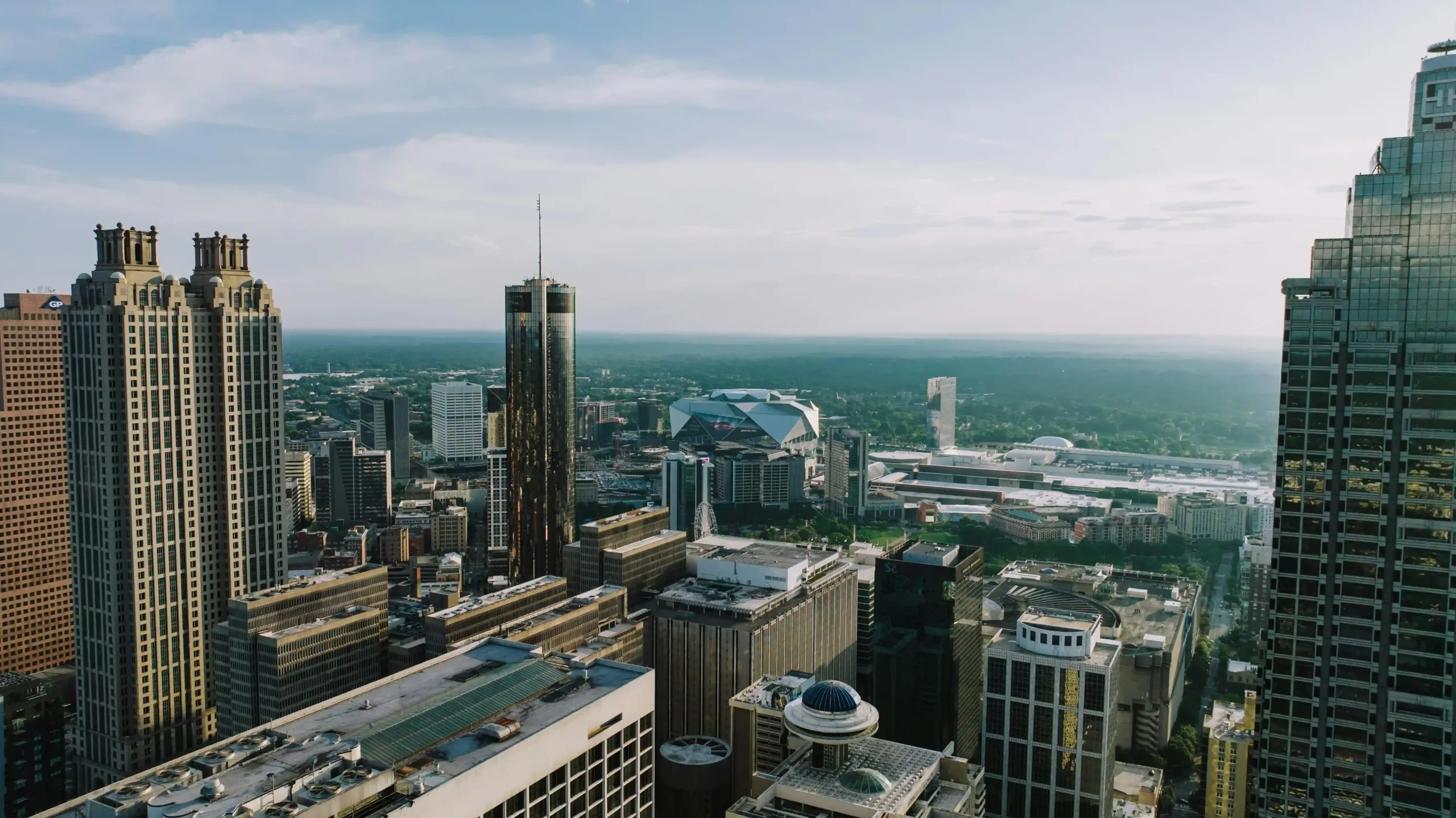
Living in Atlanta, Georgia

Big-City Energy with Neighborhood Feel

Atlanta blends Southern heritage with modern vibrancy: a major metro with rich cultural diversity, booming job centers, and distinct neighborhoods that each feel like their own small town.

From high-rise condos and historic bungalows to leafy intown streets and growing suburbs, Atlanta offers options for nearly every lifestyle — especially if you want access to top employers, airports, universities, and entertainment across the Southeast.

Counties Primarily Fulton & DeKalb; hub of a 20+ county metro
Vibe Dynamic, diverse, fast-growing — with strong neighborhood identity
Atlanta neighborhood streetscape
City Population
~520,000
Core city within a much larger metro
Metro Area
6.4M+
One of the fastest-growing U.S. regions
Median Age
~34
Skews younger, highly mobile workforce
Median Income
$80K–$85K
Higher than state & national averages
Region Role
Metro Hub

Capital city anchoring the Atlanta metro & Southeast

Residents
~520K city

Hundreds of distinct neighborhoods & communities

Median Income
$80K+

Strong professional & tech-oriented job base

Home Values
$400K+

Intown pricing varies widely by neighborhood

Connectivity
Global

World’s busiest airport & regional transit hub

Neighborhoods

Intown Districts & Where People Live

Atlanta is a “city of neighborhoods,” each with its own character, housing stock, and price point. You’ll find high-rise condos, historic craftsman bungalows, brick townhomes, and tree-lined cul-de-sacs — often just a few minutes apart.

Intown areas like Midtown, Old Fourth Ward, Virginia-Highland, Inman Park, West Midtown, Grant Park, and West End appeal to residents who want walkable streets, mixed-use developments, and easy access to MARTA, the BeltLine, and major job centers.

Intown atlanta neighborhood homes
Popular Intown Areas

Homebuyers and renters often explore:

  • Midtown & Downtown – High-rises, nightlife, major arts & business hubs.
  • Virginia-Highland, Morningside & Inman Park – Historic homes & walkable streets.
  • Old Fourth Ward & BeltLine Eastside – Trendy mixed-use, lofts, and townhomes.
  • West Midtown & Upper Westside – Warehouse conversions and new urban infill.
  • Buckhead – Luxury condos, established neighborhoods, and commercial centers.
Who Lives Here

Population & Demographics

Atlanta’s core city is home to roughly half a million residents and sits at the heart of a metro region of more than six million people. The population has grown steadily over the last decade, driven by both domestic and international in-migration.

  • Median age is in the mid-30s, reflecting a large working-age and early-career population.
  • Median household income lands in the low-to-mid $80,000s, above both statewide and national figures.
  • Educational attainment is high, with a large share of residents holding bachelor’s and graduate degrees.
  • Diversity is a defining feature — Atlanta remains a cultural and economic center for the broader Southeast.

The result is a city that feels young, dynamic, and globally connected, with neighborhoods that range from long-established communities to rapidly redeveloping corridors.

Atlanta Snapshot
  • City Type: State capital & regional economic hub
  • Metro Size: Among the top U.S. metro areas by population
  • Primary Housing: Mix of single-family homes, townhomes, condos & apartments
  • Lifestyle: Urban, walkable cores with easy access to suburban options
Atlanta skyline scaled
Education

Schools, Colleges & Universities

Atlanta is a major education hub, with public and charter schools, independent schools, and a dense cluster of colleges and universities that draw students from across the country and world.

Atlanta Public Schools (APS)

APS serves most intown neighborhoods, with a mix of neighborhood schools, specialized academies, and charter options. Families often evaluate specific attendance zones, magnet programs, and language/STEM tracks when deciding where to live.

Charter & Independent Schools

A range of charter networks and independent schools operate within the city and close-in suburbs, offering options like college-prep, arts-focused, faith-based, and Montessori programs.

Colleges & Universities

Atlanta is home to Georgia Tech, Georgia State University, Emory University, Atlanta University Center institutions, and other campuses — all contributing to a large student and recent-graduate population.

Where Families Enroll

  • Neighborhood APS schools for zoned students.
  • Citywide and magnet programs focused on STEM, IB, or the arts.
  • Independent schools in areas like Buckhead, Midtown, and the northern suburbs.

Education & Housing Decisions

Many Atlanta buyers and renters look closely at school feeder patterns and zoning maps before choosing a neighborhood, especially for elementary and middle-school-aged kids.

Families & Kids

Childcare, Camps & Youth Activities

For families, Atlanta offers a wide range of childcare providers, enrichment programs, and youth sports across the city and surrounding suburbs.

  • Daycare centers, in-home providers, and preschool programs throughout intown neighborhoods.
  • YMCA branches, Boys & Girls Clubs, and recreation centers offering after-school care and camps.
  • Private sports clubs and leagues for soccer, baseball, basketball, tennis, and more.
  • Summer programs at museums, zoos, and local universities across the metro.
City for Busy Families

With most daily errands and activities clustered along major corridors, many Atlanta parents combine school pickups, practices, and after-school activities with commutes — making location and traffic patterns a big part of lifestyle planning.

Kids sports and park activities in atlanta
Outdoors

Parks, Trails & Outdoor Recreation

Even with its urban density, Atlanta is unusually green — with a canopy of mature trees, major parks, and growing trail systems that connect neighborhoods without getting on the highway.

BP

Piedmont Park & BeltLine Eastside

Piedmont Park and the adjacent Eastside Trail of the BeltLine form one of Atlanta’s most iconic outdoor corridors, with:

  • Multi-use paths for walking, running, and biking.
  • Sports fields, dog parks, and playgrounds.
  • Year-round festivals, concerts, and farmers markets.
CH

Chattahoochee River & Northside Parks

Just north and west of the city core, residents access the Chattahoochee River National Recreation Area, Cochran Shoals, and other riverfront parks for hiking, paddling, and trail running.

NP

Neighborhood Parks & Greenspace

Pocket parks, playgrounds, and local greenways are scattered throughout neighborhoods like Grant Park, Kirkwood, Westview, and Collier Hills — making outdoor time easy even without a long drive.

Local Flavor

Food, Culture & Things to Do

Atlanta’s food, arts, and entertainment scenes are major reasons people choose to live in the city rather than just commute in. You’ll find everything from classic Southern cooking and international food halls to Michelin-recognized restaurants and neighborhood festivals.

Dining & Nightlife

  • James Beard- and Michelin-recognized restaurants across intown neighborhoods.
  • Food halls like Ponce City Market, Krog Street Market, and Chattahoochee Food Works.
  • Neighborhood taverns, rooftop bars, breweries, and cocktail lounges.

Arts, Sports & Entertainment

  • Major venues for concerts, Broadway tours, and local theater.
  • Professional sports (NFL, NBA, MLS, MLB) plus college athletics.
  • Museums, aquariums, civil rights sites, and film/TV production hubs.

Everyday Conveniences

Grocery, retail, and services cluster along key corridors — think Peachtree, Ponce, Howell Mill, Moreland, and Northside — giving residents options whether they prefer big-box centers or walkable mixed-use villages.

Jobs & Economy

Working in & Around Atlanta

Atlanta is one of the Southeast’s primary economic engines, with a mix of Fortune 500 headquarters, regional offices, logistics and transportation hubs, film and TV production, and a growing tech and life-sciences ecosystem.

  • Corporate & HQ jobs anchored by companies in logistics, finance, media, and consumer brands.
  • Technology & startup growth concentrated in Midtown, Tech Square, and around major universities.
  • Healthcare, education & government roles spread across large hospital systems and campuses.
  • Logistics & distribution driven by the airport, rail network, and interstate connectivity.
Career Mobility

Many residents change jobs without changing cities, thanks to Atlanta’s dense cluster of employers. Remote and hybrid work have also made it easier to live intown while working for companies headquartered elsewhere in the U.S.

Getting Around

Commute & Transportation

Atlanta is built around a network of interstates and arterial roads, with public transit options focused on the MARTA rail and bus systems. Commute experience can vary dramatically depending on where you live relative to job centers and transit lines.

Typical Drive Times

  • Intown neighborhood to Midtown/Downtown: ~10–25 minutes in normal traffic.
  • Close-in suburb to city center: ~25–45 minutes depending on direction and time of day.
  • City to Hartsfield-Jackson Atlanta International Airport: ~20–35 minutes, or a short MARTA ride.

Transit & Alternatives

MARTA rail and bus lines, city bike lanes, BeltLine trails, and scooters give some intown residents the option to reduce driving — but many households still rely on at least one car, especially outside core transit corridors.

Regional Access

With interstates radiating in every direction and a major international airport, Atlanta offers easy access to other Southern cities, mountain and lake destinations, and international travel.

Community

Neighborhood Associations & Local Resources

Beyond the skyline, Atlanta’s day-to-day experience is defined by neighborhood associations, community groups, and local institutions that give large-city living a smaller-community feel.

  • City of Atlanta – City services, planning, zoning, and neighborhood planning units (NPUs).
  • Neighborhood groups that coordinate events, safety meetings, and local advocacy.
  • Faith communities & nonprofits providing support, outreach, and volunteer opportunities.
  • Regional services across Fulton, DeKalb, and surrounding counties for libraries, parks, and courts.
Big City, Local Feel

Residents often identify strongly with their specific neighborhood — whether that’s Midtown, Kirkwood, Cascade, Cabbagetown, or Buckhead — and many areas organize regular festivals, porch parties, and community cleanups.

Protecting What Matters

Home Security Solutions for Atlanta Residents

In a busy, fast-growing city, professionally monitored security helps protect intown condos, historic homes, and modern townhouses alike. Callaway Security has been protecting Georgia homes and businesses for more than three decades and serves neighborhoods across the Atlanta metro area.

24/7 UL-Listed Alarm Monitoring

Fast, reliable response for intrusion, fire, and medical alarms. If we can’t reach you, first responders are dispatched, helping protect your Atlanta home or condo around the clock.

Smart Security Systems

Easy-to-use panels, door/window sensors, and smart locks that work with your phone — ideal for walk-up condos, townhome entries, and single-family homes.

Indoor & Outdoor Cameras

Cameras for front doors, driveways, parking areas, and common spaces, with motion alerts and recorded clips so you can see what’s happening day or night.

Fire, CO & Environmental Protection

Monitored smoke and carbon monoxide detection, plus optional water-leak sensors to help protect condos, older homes, and renovated properties across the city.

Smart Home Integration

Connect thermostats, lights, and other devices so you can control your Atlanta home from a single app — perfect for busy commutes and frequent travelers.

Custom-Designed Systems

Every home, condo, and townhome layout is different. Callaway Security designs custom security solutions tailored to your Atlanta neighborhood, building, and budget.