Legal Disclaimer
The information provided in this article is for general informational purposes only and does not constitute legal advice. Callaway Security and its authors are not attorneys, and this content should not be relied upon as a substitute for professional legal counsel. Laws and interpretations may change, and individual circumstances vary. For advice specific to your situation, consult a qualified attorney licensed in the State of Georgia.
Short Answer
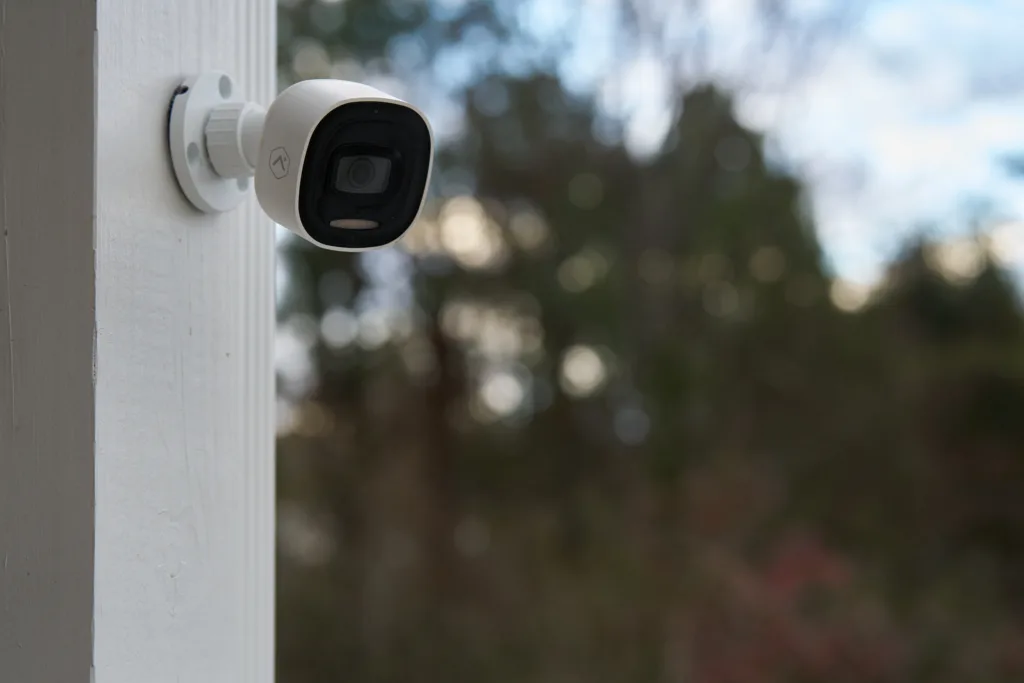
In Georgia, a neighbor may aim a security camera at your house only if it captures what anyone could see from a public street or sidewalk. The camera should show areas like the street or sidewalk. Filming driveways, front yards or other open spaces is normally allowed. It is not legal to film private areas such as the inside of your home or a fenced‑in yard without permission. Sound is treated differently — Georgia follows a one‑party consent system, so at least one person being recorded must agree. Secretly recording voices without that consent may break the law.
1 Georgia Recording and Privacy Laws
1.1 Private Places and Hidden Cameras
Georgia’s criminal code makes it a felony to watch or film someone in a private place without their consent. Georgia Code § 16‑11‑62 makes it illegal to “observe, photograph, or record” someone in a private place that is out of public view. In other words, you cannot film or photograph someone in a space that is shielded from public view. A private place is any area where a person expects privacy. Examples include the inside of a house, a fenced yard or a curtained window. Filming or taking photos in these areas without permission is against the law.
There is also a special provision regarding hidden cameras. Using a concealed device to spy on someone in a private place may violate Georgia Code § 16‑11‑64, which covers hidden cameras and eavesdropping devices. Cameras should be visible and only used for legitimate security purposes.
1.2 Exceptions for Property Owners
The law allows some exceptions. It is not illegal for a property owner to use a camera for security. This exception applies only to areas where there is no reasonable expectation of privacy. You may also film around the outside of your own home for security. You can point a camera at your front door, driveway or yard to protect your home. But you cannot aim it through a neighbor’s windows or into spaces that are hidden from public view. Keeping cameras in the right place helps protect everyone’s privacy.
1.3 Audio Recording – One‑Party Consent
Georgia is a one‑party consent state for sound. Georgia Code § 16‑11‑66 says that nothing in § 16‑11‑62 stops a person from taping a talk if they are taking part. It is also allowed if one of the people involved has agreed. In short, at least one person must know and agree to the recording. Taping voices without that consent, especially in a private setting, can break the law.
2 Public vs. Private Recording
Public areas: Recording in spaces where others can reasonably see you — such as sidewalks, driveways or front lawns — typically does not violate Georgia law. Cameras aimed at areas visible from a street or sidewalk are usually legal.
Private areas: Spaces inside a home, fenced yards or secluded patios are protected from surveillance under § 16‑11‑62. Recording activity that occurs “in a private place and out of public view” can be a felony offense punishable by fines or imprisonment.
3 When a Neighbor’s Camera Is Legal
Your neighbor’s camera is usually lawful only when it meets certain conditions. Each condition is explained below. Following these conditions keeps you within the law.
3.1 Public View
The camera should point at areas anyone could see from a street or sidewalk, such as a front yard or driveway. Aiming at open, public spaces is usually allowed.
3.2 On Their Property
The camera must be mounted on the neighbor’s house or land and should watch their own entrances. It should not peer through your windows or over fences.
3.3 No Private Areas
The camera should not film inside your home, through curtains or into a fenced yard. Recording private spaces is against the law.
3.4 No Hidden Audio
The camera should not secretly capture conversations. If it records sound, at least one person being recorded must consent.
4 When a Neighbor’s Camera Violates the Law
Your neighbor’s camera crosses the line if it invades your privacy or breaks the law. Here are common examples. Doing any of these things is not allowed.
4.1 Filming Private Spaces
Filming through your windows or into bedrooms, bathrooms or a fenced backyard is against the lawlaw.justia.com. These are private spaces where you expect privacy.
4.2 Capturing Sound Without Consent
Recording sound when you are not aware or do not agree breaks Georgia’s one‑party consent rulelaw.justia.com. At least one person must agree to the recording.
4.3 Hidden Cameras
Using concealed devices to spy on neighbors may violate Georgia Code § 16‑11‑62 and § 16‑11‑64. Cameras should be visible.
4.4 Harassment and Stalking
A camera that intimidates you or follows your movements may amount to stalking or harassment. Under O.C.G.A. § 16‑5‑90, stalking occurs when someone follows or surveils another person for the purpose of harassment or intimidation. Repositioning a camera to track your activities, refusing to adjust it after you ask, or combining surveillance with threatening messages could meet this standard. Intent matters, and persistent unwanted monitoring can trigger harassment consequences.
5 What to Do If a Camera Points at Your Property
- Document the setup. Take clear photos or videos showing where the camera is mounted and what areas it appears to record. Include timestamps and note any movement or repositioning.
- Speak with your neighbor. Politely ask your neighbor to adjust the camera’s angle or position if it captures parts of your property. Calm, respectful communication often resolves these issues quickly.
- Check for audio recording. Determine whether the camera has a built‑in microphone. If so, check whether it’s active or capable of recording conversations, as this may raise additional legal concerns under § 16‑11‑66.
- Evaluate visibility. Ask yourself whether the area being recorded is visible from public view. If the space is fenced, enclosed or otherwise private, your expectation of privacy under Georgia law is stronger.
- Send a written request. If informal discussions do not resolve the issue, send a dated written request or email referencing § 16‑11‑62. Document your communication for future reference.
- Consult a Georgia attorney. If the camera continues to capture private areas or you feel harassed, consult a qualified Georgia attorney. They can advise you on potential invasion‑of‑privacy claims, harassment or stalking complaints, or other enforcement options.
6 Tips for Homeowners Installing Cameras
If you plan to install security cameras, follow these best practices. They will help you stay within the law. These simple steps help you stay legal.
- Aim at your own property. Point cameras at your front door, driveway and other entrances. Avoid filming neighbors’ windows or fenced‑in spaces.
- Disable or limit audio capture. Turn off microphones unless you or another person involved consents to being recorded.
- Keep cameras visible. Do not hide them. Concealed devices can violate privacy laws.
- Review HOA rules and city ordinances. Some homeowner associations (HOAs) and municipal codes have additional restrictions.
- Use privacy masking. Many modern systems (Ring, Arlo, Google Nest) allow you to block specific zones within the camera’s field of view.
7 Quick Reference Table
The table below summarizes common camera scenarios and their likely legal status under Georgia law.
| Scenario | Likely Legal Status | Reason |
|---|---|---|
| Camera faces front yard or driveway visible from public street | ✅ Likely legal | Public view; no expectation of privacy |
| Camera faces fenced backyard or private patio | 🚩 Likely illegal | Private area shielded from public view |
| Camera records through windows into home interior | 🚩 Likely illegal | Invades a private space |
| Camera records audio conversations without consent | 🚩 Likely illegal | Violates one‑party consent rule |
| Camera monitors neighbor’s property but includes your area in background | ⚠️ Usually legal unless focused on your space | Incidental capture of public view is allowed |
8 Frequently Asked Questions
Can my neighbor record my backyard in Georgia?
No. If your backyard is fenced or shielded from public view, it is considered a private space. Recording it without consent may violate § 16‑11‑62, which protects individuals against surveillance in private areas.
Can my neighbor record audio of me outside my home?
Only if at least one person consents. Georgia’s one‑party consent law permits recording sound when a person involved agrees. If you are not aware of or have not consented to being recorded, the audio recording may be unlawful.
Can I ask my neighbor to remove or move their camera?
Yes. You have the right to request that the camera be repositioned or redirected. Always make the request in writing and keep a copy for your records. Many disputes can be resolved through clear communication.
Can I sue my neighbor for filming my windows?
Possibly. If a camera records private areas of your home — such as windows, bedrooms or fenced yards — you may have grounds for an invasion‑of‑privacy claim or a potential criminal complaint under Georgia law. Speak with a lawyer to discuss your specific situation.
9 Protecting Your Privacy Legally
If your neighbor’s camera concerns you, there are legal and effective ways to increase privacy without escalating conflict.
9.1 Physical Privacy Enhancements
- Privacy landscaping: Plant tall shrubs or hedges within your property line to block camera views.
- Outdoor screens or trellises: Create a visual barrier while maintaining aesthetic value.
- Window privacy film: Use mirrored or frosted film to prevent interior visibility.
- Adjust outdoor lighting: Redirect floodlights or motion sensors away from shared spaces.
9.2 Smart Technology Options
- Cameras with privacy zones: Many modern systems allow masking of specific areas within the camera’s field of view.
- Camera notifications: Some devices can alert you when motion is detected toward your property, allowing you to monitor potential intrusion.
- Video storage control: Keep your own footage secure and encrypted to prevent unauthorized access.
9.3 Legal Best Practices for Your Own Cameras
- Keep cameras aimed only at your own property boundaries.
- Avoid recording into your neighbor’s home or fenced areas.
- Disable or limit audio recording unless you are part of the conversation.
- Check for HOA or municipal guidelines governing exterior camera placement.
You can enhance security and maintain privacy without violating Georgia law. The best approach balances visibility, intention and respect for privacy boundaries — both yours and your neighbor’s.
10 Local Enforcement and Resources
For residents across Metro Atlanta, Alpharetta, Cumming and Roswell, the following contacts may assist with privacy or surveillance concerns:
| Department | Contact | Jurisdiction |
|---|---|---|
| Alpharetta Police Department | (678) 297‑6300 | Alpharetta & Milton |
| Roswell Police Department | (770) 640‑4100 | Roswell |
| Cumming Police Department | (770) 781‑2000 | Cumming |
| Atlanta Police Department | (404) 614‑6544 | City of Atlanta |
| Georgia Attorney General — Consumer Protection | (404) 458‑3800 | Statewide |
If you feel unsafe or believe surveillance is being used to harass or threaten you, call 911 for immediate assistance.
11 Summary and Key Takeaways
Georgia homeowners are protected under state laws that balance security rights and privacy rights.
- Cameras may record public areas but not private spaces without consent.
- Persistent, targeted or intimidating use of cameras may constitute harassment or stalking.
- Document and communicate concerns. Speak with neighbors and put requests in writing.
- You can legally improve privacy through landscaping, smart technology or repositioning your own cameras.
- The deciding factor is your reasonable expectation of privacy.
- When uncertain, consult a qualified Georgia attorney or local authorities.
Understanding your privacy rights is the first step toward feeling secure at home. For residents in Metro Atlanta — including Alpharetta, Roswell, Cumming and Atlanta — Callaway Security™ offers professional advice on home security systems. We can help with camera placement and legal compliance. Contact us if you need help installing a lawful security system or have questions about Georgia’s surveillance laws.
Updated Legal Disclaimer
The information provided in this article is for general informational purposes only and does not constitute legal advice. Callaway Security and its authors are not attorneys, and this content should not be relied upon as a substitute for professional legal counsel. Laws and interpretations may change, and individual circumstances vary. For advice specific to your situation, consult a qualified attorney licensed in the State of Georgia.